Some substances are biodegradable because microorganisms have enzymes that can break their chemical structures into simpler materials. Others are non-biodegradable because their bonds, shapes or additives resist those biological processes, or because the right microbes and environmental conditions are absent.
The distinction is not simply “natural versus artificial.” Paper may decompose quickly in warm, moist, oxygen-rich compost but persist much longer in a dry landfill. Some plastics are designed for industrial composting yet do not break down properly in soil, seawater or a home compost bin.
What biodegradable means
Biodegradation is breakdown driven by living organisms, especially bacteria and fungi. They use enzymes to turn suitable material into smaller molecules. Depending on oxygen and conditions, end products can include water, carbon dioxide, methane, mineral nutrients and new microbial biomass.
The NCERT science laboratory manual describes decomposers as mainly bacteria and fungi that digest dead plant and animal material. It contrasts those wastes with materials such as conventional polythene, plastic and glass that do not degrade biologically or do so extremely slowly.
Why chemical structure matters
Microbial enzymes work on particular chemical bonds. Starch, cellulose, proteins and many fats resemble compounds organisms already use as food. Their bonds are accessible to common enzymes. A dry leaf, banana peel, untreated wood and plain paper therefore have familiar biological pathways.
Many synthetic polymers have long, tightly packed chains, high crystallinity or carbon backbones that common enzymes cannot easily attack. Manufacturers may add stabilizers to resist sunlight, heat and oxidation. Those useful durability features also slow environmental breakdown.
Conditions can change the result
| Factor | Why it matters |
|---|---|
| Moisture | Microbes need water for metabolism and transport. |
| Temperature | Enzymes work within suitable ranges; industrial compost is hotter than a garden pile. |
| Oxygen | Aerobic and anaerobic pathways create different rates and products. |
| Surface area | Smaller pieces expose more material but fragmentation alone is not biodegradation. |
| Microbial community | The necessary organisms and enzymes may not be present. |
The US Environmental Protection Agency defines composting as managed aerobic biological decomposition. “Managed” matters: temperature, air, moisture and feedstock are controlled.
Biodegradable is not the same as compostable
A biodegradable claim says microbes can eventually break a material down under some conditions. A compostable product must meet more specific conditions and should break down within a composting process without leaving harmful residue. Certification may apply only to an industrial facility.
The EPA’s plastic recycling and composting FAQ warns that compostable plastics are not intended for ordinary recycling and can contaminate that stream. Follow the local facility’s accepted-material list rather than relying on a green label.
Examples and important exceptions
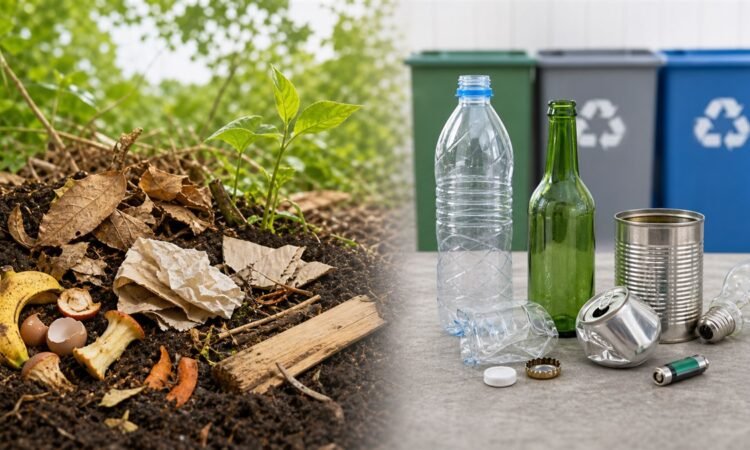
- Usually biodegradable: food scraps, untreated paper, leaves, cotton, wool and untreated wood.
- Usually non-biodegradable on human timescales: glass, metals and many conventional plastics.
- Condition-dependent: certified compostable packaging, coated paper, treated wood and mixed-material products.
Glass and metal can be recyclable without being biodegradable. A plastic may be biobased without being biodegradable. Conversely, a biodegradable plastic can still be fossil-derived. These terms describe different properties.
Why “disappearing” can be misleading
Sunlight and abrasion can make plastic brittle and break it into tiny pieces. That is fragmentation, not necessarily complete biodegradation. Microplastics can remain even when the original item is no longer visible. Complete breakdown requires conversion at the molecular level, not merely smaller fragments.
DeepTechy’s articles on PLA nonwoven biodegradability and PLLA material properties show why a polymer name and its disposal setting must be considered together. The comparisons with durable PETG film and packaging waste decisions provide further context.
How to dispose of materials correctly
Reduce and reuse first when practical. Separate recyclable glass, metal, paper and accepted plastics according to local rules. Put food and yard material in an organics program only if it is accepted. Do not place compostable plastic in recycling unless the local authority explicitly asks for it, and do not litter an item because its label says biodegradable.
Chemical structure determines what enzymes can attack
Microorganisms do not “eat” every carbon-containing material. They release enzymes that fit certain chemical bonds and break large molecules into smaller units that cells can use. Natural materials such as starch, cellulose and many proteins have bonds that common microbial communities can process. Many synthetic polymers have long, stable backbones, water-repelling surfaces or additives that make access difficult.
A material can therefore contain plant-derived carbon and still resist biodegradation. Likewise, a petroleum-derived material can be engineered to biodegrade under specified conditions. The source of the raw material and the behavior of the finished polymer are different questions.
The environment changes the rate
| Factor | Why it matters |
|---|---|
| Microorganisms | The necessary species and enzymes must be present |
| Moisture | Microbial metabolism and transport need available water |
| Oxygen | Aerobic composting depends on airflow; buried environments behave differently |
| Temperature | Activity changes with temperature, and industrial composting can run hotter than soil |
| Surface area | Smaller pieces expose more material but fragmentation alone is not biodegradation |
| Time | “Eventually” is not useful unless the test period and conditions are stated |
An apple peel may break down quickly in an active compost pile but much more slowly in a dry, sealed or oxygen-poor location. A certified compostable package may require an industrial facility and remain largely unchanged in a home pile. Claims should always name the environment.
Biodegradation is not the same as disintegration
Sunlight, heat and abrasion can make plastic brittle and split it into smaller fragments. That is physical degradation, not proof that microorganisms converted the material into carbon dioxide, water, biomass and other simple products. If the polymer remains as tiny pieces, the litter problem has changed size rather than disappeared.
Standards for compostable materials examine more than whether an item becomes invisible. They consider biological conversion, disintegration during a defined composting cycle and the quality of the resulting compost. A vague “eco-friendly” label does not provide the same evidence as a named certification for a named disposal system.
Biodegradable, compostable, recyclable and biobased
- Biodegradable describes biological breakdown under stated conditions.
- Compostable means the material meets requirements for a composting process and produces acceptable compost; the facility type matters.
- Recyclable means a collection and processing system can turn the material into feedstock. Local acceptance matters more than the symbol alone.
- Biobased describes the source of some or all carbon, not automatic biodegradability.
These categories can overlap, but none is a universal instruction. A compostable cup can contaminate a conventional plastic-recycling stream, and a recyclable bottle does not belong in a compost bin.
How to dispose of an unfamiliar item
- Read the complete label for a certification mark and facility requirement.
- Check the local waste authority’s current accepted-material list.
- Separate food residue when the recycling program requires clean containers.
- Do not place industrially compostable packaging in a home pile unless the label explicitly allows it.
- When no suitable program exists, follow local residual-waste guidance rather than wish-cycling.
Reducing and reusing usually avoid more material than choosing between end-of-life labels. A durable item used many times can be preferable to a disposable item marketed with an imprecise degradation claim.
Questions that make a biodegradability claim meaningful
Ask: Which standard was used? What percentage must biodegrade? In what medium and temperature? Over what period? Does the item require industrial composting? Are coatings, inks and adhesives included in the certification? Answers to those questions turn a broad marketing word into a claim that can be checked.
Everyday examples need conditions, not absolute labels
Food scraps, untreated paper and leaves are commonly biodegradable because microbial communities can access their natural polymers. Glass and metals do not biodegrade; they may corrode, weather or be recycled through non-biological processes. Conventional polyethylene and polypropylene usually persist because common microbes cannot readily mineralize their stable polymer chains.
Mixed products are harder to classify. A paper cup may include a plastic lining, a tea bag may contain synthetic fibers, and a coated cardboard package may not belong in a compost stream. Judge the whole item, including coatings, adhesives and labels, and follow the facility’s accepted-material rules.
Why landfill is not a giant compost pile
Landfills are designed to contain waste, not to provide the balanced oxygen, moisture and mixing of managed composting. Organic material can decompose without oxygen and generate methane, while dry or compacted areas may slow breakdown. Calling an item biodegradable therefore does not mean disposal has no environmental consequence or that littering is acceptable.
Frequently asked questions
Why are leaves biodegradable but plastic bags are not?
Microbes have common enzymes for plant compounds such as cellulose, while conventional plastic chains resist those enzymes.
Is paper always biodegradable?
Plain paper generally is, but coatings, laminates and chemical treatments can change its behavior and disposal route.
Is glass biodegradable?
No. It does not undergo biological decomposition, though it can often be recycled.
Does biodegradable mean safe to litter?
No. Breakdown may require special conditions and the item can still harm wildlife or waterways.
Are all bioplastics compostable?
No. Biobased describes feedstock, while compostable describes performance under specified conditions.
Can a landfill preserve biodegradable waste?
Yes. Low oxygen, limited moisture and compaction can slow decomposition greatly.