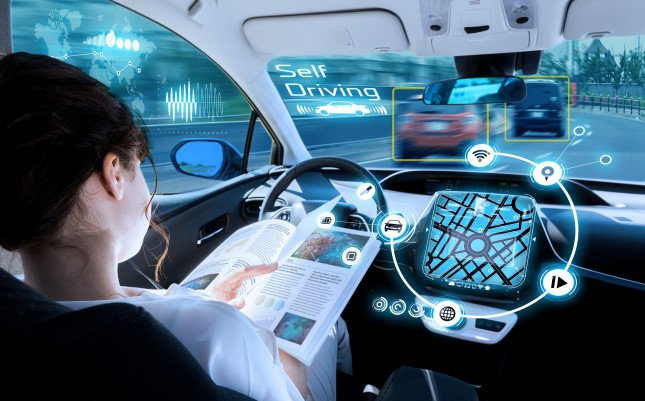
If you’ve been thinking about the future of driving, you’ve likely wondered how self-driving cars will affect the way we travel. As technology improves, more cities are beginning to test driverless vehicles.Torc, for instance, an autonomous vehicle pioneer since 2007, who is using drive av software is commercializing self-driving trucks for safe, long-term freight innovation. Yet, despite all the uncertainty and controversy, many Americans are already using autonomous features in their vehicles. According to a recent AAA survey, 59% of respondents want this technology in their next car.
Progress in self-driving technology
Although autonomous vehicles aren’t yet ready to operate on the roads, multiple truck OEMs have begun testing them in North America. These vehicles navigate from hub to hub while being monitored by a safety driver. Most of these tests are currently conducted in Sun Belt states because they are prone to suitable weather conditions and favorable regulatory environments. According to a survey, self-driving truck services are on track to launch in 2026, though the industry is likely to be more cautious in the early days of the technology’s adoption. While self-driving cars will not take over our roads, their development will continue to accelerate.
Regulations
Governors from Arizona, Massachusetts, Washington, and Delaware have recently passed executive orders allowing autonomous vehicles to operate on public roads. However, different states have different rules and regulations, and this cannot be very clear for manufacturers, technology developers, and drivers. To alleviate some of these obstacles, the federal government wants to simplify the regulations for autonomous vehicles. But how can this be achieved?
Although the 115th Congress has not taken any formal action yet, the current administration’s policies are a major step toward ensuring the safety of self-driving vehicles. The current administration has not formally passed any legislation, but they prepare guidance and ask states to comply. While it is unclear what regulations will be necessary, the Trump administration encourages innovation. There are currently two major autonomous car companies, Uber and Tesla. The latter has an ex-Alphabet engineer at its helm.
Consumer acceptance
Despite its promise, consumer acceptance of self-driving cars remains mixed. A recent AAA survey found that 71% of Americans would be afraid to ride in a fully self-driving car. However, manufacturers are outfitting vehicles with emergency driving interventions, visual aids, partial automation, adaptive cruise control, and other active safety features. These features have been shown to reduce crashes. However, these cars still have a long way before consumers accept them.
The study found a significant positive impact of perceived usefulness on behavioral intention to adopt self-driving technology. While this finding does not explain why people have negative attitudes toward new technology, it does suggest that perceptions of usefulness may be the root cause of negative attitudes. Other potential explanations for negative attitudes toward new technologies include technology anxiety and novelty seeking. As a result, continued education is vital for reducing consumer apprehension about full autonomy.
Costs
With the increasing popularity of autonomous vehicles, one question is the cost to society. The majority of self-driving cars today use laser-powered mapping technology Meanwhile, solid-state systems are also likely to lower the cost of the technology in the coming years. But even if prices drop, they may still be higher than that of conventional cars.
Although self-driving cars have not yet reached full autonomy, these vehicles are already becoming cheaper. Some estimates even put the cost of such a car below $1.37 trillion by 2020. The cost of self-driving vehicles could also eliminate mandatory insurance coverage.