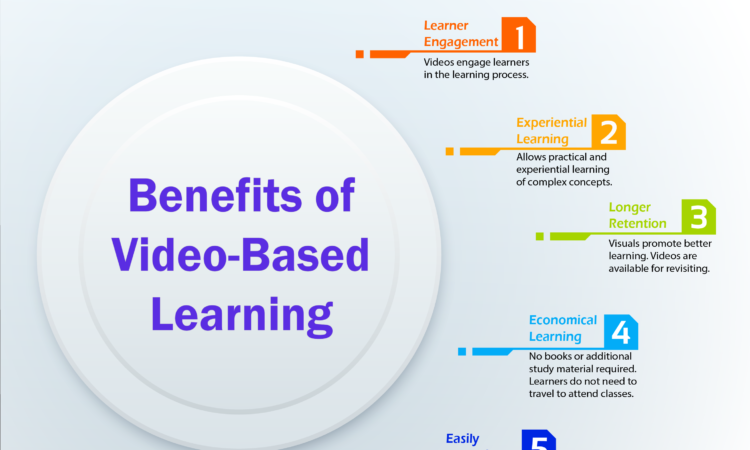
One of the main advantages of online video lessons is that students can move through the information at their own pace and on their own time. Online video lessons also enable educators to cover more material more quickly. Students can also control their learning experience, speed up or slow down the videos, and rewatch them whenever they need to. They can also use online video lessons as part of a flipped classroom model. As a result, students can benefit from many of the same benefits that classroom teachers would receive from teaching a subject through traditional methods.
Videos help students learn the information
They increase focus and retention. Students learn by seeing the video, not by listening to the speaker. And short videos give teachers more flexibility to tailor their lesson plans. Short videos also promote ownership and reflection.
Make the videos short and sweet. Students can absorb the information faster when watching a video that is only five to 10 minutes long. Short videos also allow teachers to customize their lesson plans by picking short and relevant videos to the topics they teach. Shorter videos also allow teachers to include interactive features that increase the student’s engagement. Finally, videos are easy to share, making them perfect for promoting an educational video platform.
The use of video helps break down barriers and foster student engagement. Short videos help students learn the information faster by presenting it in a way that is visually and auditorily appealing to many people. Students will be more engaged with the content if the videos are short and precise. They will be better able to recall and process the information on an educational video platform because they’ll have multiple opportunities to ask questions and engage in discussion.
Videos provide a more engaging sensory experience
According to a study conducted by Kaltura, 82% of educators say that using educational videos improves student learning. However, many teachers still have difficulty sourcing engaging videos in class. The survey also revealed that many educators want to improve their digital literacy skills and receive training to create learning videos for students. The benefits of educational videos to student learning are many. This article will examine why educators should consider using educational videos in their classes.
Videos offer a more engaging sensory experience than traditional classrooms and teaching methods. As a result, learners can see and hear concepts more naturally and are more likely to retain the information. Additionally, these videos are available for viewing on a variety of devices and can be replayed as many times as necessary. This allows students to review lessons long after the initial task is over. Therefore, video content is a great way to help improve student learning and make classrooms more efficient.
Videos facilitate remote learning opportunities
The use of videos in education has numerous benefits. Not only do videos provide students with a sensory experience that is impossible to duplicate in a classroom, but they can also be viewed on a wide variety of devices. In addition, students can review the video material as many times as possible, even if they don’t attend the actual class. These benefits are just a few reasons why educational video platforms are an excellent resource for remote learners.
The use of videos allows teachers to build rapport with their students. While students may not watch all videos, they can cause them to help them understand the concept. Moreover, the use of video in education allows teachers to build relationships with students, even if they don’t live in the same city or country. The videos also give teachers new insight into students’ learning capacities and styles.
Videos can be used to illustrate how not to do something
While a student’s reaction to a video is essential, it is even more critical to develop a pedagogical purpose for it. Videos can be used to review or reinforce important course content, introduce new content, or teach skills. Students should know what to expect from the video. Whenever possible, tie the video to an activity to reinforce learning. For instance, a student can follow instructions in the video to learn how not to do a particular activity.
Using a personal feel for videos can engage students more than a professionally recorded one. A student will engage more if the video is unique, so speaking in a conversational style will help him retain information. The instructor should maintain eye contact and keep a conversational tone. Talking head videos also increase the engagement of students more than slides. If an expert is incorporated in an educational video, the presenter can summarize their statements.