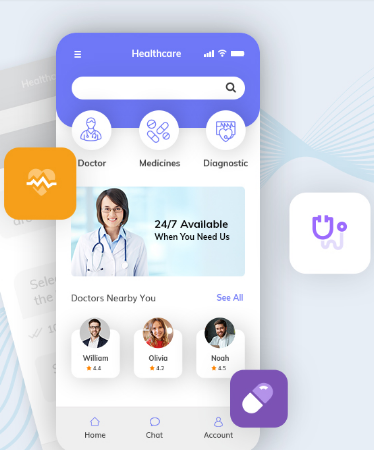
Currently, different types of organizations create personalized mobile-intuitive applications for their operations. There is a wide variety of apps available in the healthcare industry that benefits both the healthcare service providers and patients. Statistically, the global market size of healthcare apps would grow at a 25.3% CAGR to USD 20.7 billion by 2027.
Telehealth services are dynamic and diversified, giving patients quick and easy access to healthcare through mobile devices. For example, people can connect to health professionals for virtual consultations and even order medication delivery. Statistically, doctors and other healthcare service providers handled around 50-175 times more online consultations in the post-pandemic period.
You should hire capable developers from reliable app development companies like Flutter Agency for the best healthcare app development. Here, you will learn about the notable points to keep in mind while planning and generating these apps for patients.
Requirement of patients with healthcare apps
Patients mostly require three main functions from the mHealth apps they use. They want to have the option of quickly requesting e-prescriptions, canceling/scheduling appointments, or accessing all medical records securely.
Statistically, only 11% of the apps for hospital use guarantee all functions. Another study was conducted with 360 patients opting for ambulatory surgery to understand their preferences and needs of healthcare app needs and engagement interests. Most of the patients admitted that they needed better communication and procedural information from the app.
Typically, patients want functional healthcare apps that come with varying functional features. They demand simple accessibility to all healthcare app data, smooth functions like quick scheduling, detailed insights, an intuitive interface, and access to healthcare professionals.
Tips for optimized healthcare app development
You can adopt many steps and approaches to create a high-quality and usable healthcare app for patients. Get healthcare mobile app development from Flutter Agency for top-notch development solutions for creating custom mHealth apps for the best results.
Here are some points to focus on.
1. Conduct a comprehensive market evaluation
The first step to a top-quality app development process is to know what to expect. For this, it is vital to conduct thorough market research, like studying the competitive apps available.
Study their apps, the standard and unique features, the strength and pain points, and customer reactions. Also, check the healthcare app ideas that are prevalent. Later, prepare a base outline for the app objective you would follow and the features to add.
2. Consider types of healthcare apps
In the market, there are different types of healthcare apps available, each targeting the specific needs of patients. Get the right insights to set your target audience and create a customer persona through your initial research. Consider what demands you want to fulfill and plan your app development project accordingly.
There are different types of common mHealth apps targeting specific pain points:
● Apps for health/wellness– One of the most popular types is healthcare and wellness apps. It tracks and monitors the users’ health condition, promotes wellness, preserves health, and prevents harmful health conditions. Subtypes under this category include vaccination, diet, fitness, and relaxation apps.
● Medication healthcare apps– Users can upload digital prescriptions and order their medications remotely. Plus, they would get necessary pharmaceutical data, like drug brand name, dosage, indications, side effects, usage, formulation, and more details.
● Emergency response apps– These healthcare apps are helpful for quick medical emergency notification and contact. They contain content like first aid tips, step-by-step guidelines, and practical guides. Plus, they include quick access to emergency departments in local hospitals or healthcare centers.
● Medical information apps- This type of app is mainly for medical professionals, caregivers, and patients alike. They get updated information about different health issues and diseases for better diagnosis and prevention.
● Hospital personnel apps- These mHealth apps are specialized for patient care in hospitals. Doctors, medical technologists, nurses, and other staff use these for updated patient information management.
3. Choose the most suitable platform
The best developers like those at Flutter Agency would make sure to focus on the supported platform factor before starting the development. The type of OS the app would have would determine the types of features that you can add and the usability. Also, consider the target audience of your brand.
For example, the apps you would create with Android-based programming languages and structure would not work on iOS devices. Plus, it would not fit the device frame accurately. So, select the OS you want to create the custom app for, or if you want hybrid healthcare app development.
4. Focus on the development and design as per the original plan
After comprehensive planning of the healthcare app structure, the development team should start with the app design and development. Focus on the back-end coding. Add the right features as you planned in the app wireframe you created during the planning process. Connect the elements to the right front-end features and check for seamless functioning repeatedly.
5. Design apps for no- or low- hearing and vision patients
Instead of planning the design of your healthcare only with a general user persona, consider other groups, like individuals with disabilities. For example, since most devices have smaller screen sizes, regular apps are already disadvantageous for visually impaired patients. So, adopt practices like:
● Create a responsive design with hidden navigable menus or mobile-intuitive app versions with fewer images, content modules, etc.
● Provide on-page controls feature to adapt text size
● Add a reasonable default content size and control text magnification.
● Develop alternative CSS using a color scheme with higher contrasts.
● Do not add decorative or complex fonts.
6. Integrate with wearables
Wearable technology makes healthcare monitoring and tracking more accessible for patients. So, integrate your healthcare app with wearable technology like smartwatches and health trackers.
These devices can record vital patient data like blood sugar levels, heart rate, posture control, tremors, sleep patterns, and physical activities. Many wearable devices come with a speedometer feature that counts steps and calories, suitable for fitness app types.
Conclusion
Many companies integrate new technologies and adopt new approaches to healthcare app development. During this process, take time to understand the target audience’s needs, prepare a suitable plan, and add diverse, high-quality features. In the current trend, it is recommended to use Flutter technology and consult the Flutter application development company before switching to any other technology. Hire a top-quality agency for the task as they would carefully handle all steps and create a user-friendly app at the end.
Read also: avple