
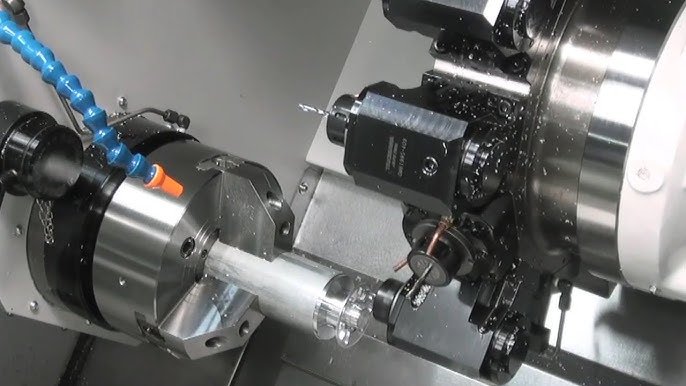
Investing in the right CNC machinery is an important decision for any manufacturing business. A CNC lathe plays a crucial role in producing precise cylindrical parts used across industries such as automotive, aerospace, electronics, and industrial equipment. When choosing a machine, manufacturers must evaluate several technical and operational factors to ensure the equipment meets their production needs. Understanding these features can help businesses make a well-informed purchasing decision and improve long-term productivity.
Among the available options in modern machining, the 2 Axis CNC Lathe is widely recognized for its efficiency and reliability in turning operations. This machine operates along the X and Z axes, allowing accurate cutting, facing, threading, and shaping of workpieces. Before purchasing one, it is essential to examine its specifications, performance capabilities, and compatibility with your manufacturing requirements to ensure it delivers consistent results and supports production growth.
Machine Precision and Accuracy
One of the most important features to consider when buying a CNC lathe is its precision and accuracy. Manufacturing industries rely heavily on machines that can maintain tight tolerances and produce consistent parts over long production runs. A high-quality 2 axis CNC lathe should offer stable construction, advanced control systems, and precise tool movement.
Look for machines with rigid frames and high-quality components that reduce vibration during machining. Reduced vibration helps improve surface finish and dimensional accuracy. Additionally, machines equipped with advanced CNC controllers provide better control over cutting parameters, ensuring reliable performance even when working with complex designs or demanding materials.
Spindle Power and Speed Range
The spindle is a critical component of any CNC lathe, as it directly affects the machine’s cutting performance. When selecting a machine, manufacturers should evaluate spindle power and speed range carefully. These factors determine how efficiently the machine can handle different materials and machining operations.
A powerful spindle allows the lathe to cut through tougher materials such as stainless steel or hardened alloys. Meanwhile, a wide speed range enables the machine to perform both roughing and finishing operations effectively. This flexibility is especially valuable for manufacturers who work with a variety of materials and product designs.
Tooling Capacity and Turret Design
Another key factor to evaluate is the machine’s tooling capacity and turret configuration. The turret holds multiple cutting tools that can be automatically switched during the machining process. A well-designed turret improves efficiency by reducing manual intervention and allowing several operations to be completed in a single setup.
Machines with higher tooling capacity are often better suited for complex parts that require multiple cutting processes. Additionally, quick tool change systems can significantly reduce downtime, helping manufacturers maintain continuous production and improve overall workflow.
Control System and User Interface
Modern CNC lathes are equipped with sophisticated control systems that determine how easily operators can program and manage machining tasks. A user-friendly interface is essential for improving productivity and reducing the learning curve for machine operators.
When choosing a 2 axis CNC lathe, consider machines with intuitive software, clear displays, and compatibility with common CAD and CAM systems. Advanced control systems can also provide real-time monitoring, diagnostics, and automation features that help optimize machining performance and reduce errors during production.
Machine Size and Workpiece Capacity
Before purchasing a CNC lathe, it is important to assess the size of the machine and the maximum workpiece capacity it can handle. Manufacturers should ensure the lathe can accommodate the diameter and length of the parts they plan to produce.
A machine that is too small may limit production capabilities, while an overly large machine could consume unnecessary floor space and energy. Evaluating your typical workpiece requirements helps ensure that the selected CNC lathe fits seamlessly into your manufacturing environment and supports efficient operations.
Build Quality and Durability
Durability is another crucial factor when investing in industrial machinery. CNC lathes are expected to operate continuously for extended periods, so strong build quality is essential for maintaining consistent performance. Machines constructed from high-grade materials and designed with reinforced structures tend to last longer and require less maintenance.
In addition, reliable components such as linear guides, ball screws, and bearings contribute to smoother machine operation. A durable machine not only improves machining accuracy but also reduces maintenance costs over time.
After-Sales Support and Maintenance
After-sales support is often overlooked but plays a significant role in the long-term value of a CNC machine. Even the most advanced equipment may require maintenance, software updates, or technical assistance. Choosing a supplier that provides reliable customer support, training, and spare parts availability can make a significant difference in machine performance and operational continuity.
Manufacturers should also consider whether the supplier offers installation assistance and operator training. Proper training ensures that the machine is used efficiently and safely, maximizing its capabilities and lifespan.
Conclusion
Selecting the right CNC lathe requires careful evaluation of several technical and operational factors. Features such as precision, spindle performance, tooling capacity, control systems, machine size, and durability all influence how effectively the machine will perform in a production environment. By thoroughly assessing these aspects, manufacturers can choose equipment that aligns with their operational goals and production demands.
A well-chosen 2 axis CNC lathe can significantly improve machining efficiency, product quality, and long-term productivity. With the right investment, manufacturers can enhance their capabilities, adapt to evolving industry requirements, and maintain a competitive edge in the global manufacturing landscape.


