
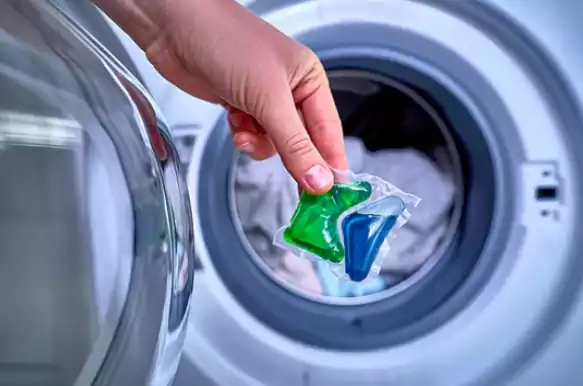
Laundry pods have become a popular solution for modern households, offering convenience, precise dosing, and minimal mess. The production of these pods requires specialized machines designed to handle different detergent types, including liquid, gel, and powder formulations. Laundry pod machines have evolved to meet the diverse needs of manufacturers, providing efficient, high-quality, and consistent production. Understanding how these machines operate for liquid and powder detergents is crucial for businesses seeking to optimize their production processes.
Production of Liquid and Gel Pods
Liquid and gel detergents are widely used in laundry pods due to their fast-dissolving properties and smooth formulation. Producing liquid pods requires specialized handling equipment that ensures accurate dosing and leak-proof sealing.
A typical laundry pod machine for liquids incorporates pumps or piston fillers to measure precise amounts of detergent for each pod. This precision is essential because even small variations in volume can affect cleaning performance or result in leakage. The water-soluble film used to encase liquid detergents must be carefully handled to prevent tearing or misalignment, and the sealing mechanism must accommodate the fluid consistency without compromising pod integrity.
Automation plays a critical role in liquid pod production. Machines equipped with sensors, programmable logic controllers (PLC), and human-machine interfaces (HMI) monitor the entire process in real time. These systems ensure uniform filling, consistent sealing, and accurate cutting, minimizing human error and maximizing production efficiency.
Production of Powder Detergent Pods
Powder detergents are another common formulation for laundry pods, offering advantages such as extended shelf life and strong cleaning performance. However, producing powder pods presents unique challenges, including precise volumetric dosing and proper sealing to prevent leakage or contamination.
Laundry pod machines designed for powders often use auger-based dosing systems or volumetric cups to measure the exact quantity of powder for each pod. The dosing mechanism must maintain consistent flow and prevent clogging, which can occur due to variations in powder density or humidity. Proper sealing is also essential; heat sealing or ultrasonic methods are used to secure the water-soluble film around the powder, ensuring pods remain intact during storage and handling.
Both liquid and powder pods benefit from automated monitoring systems that detect irregularities in dosing, sealing, and film alignment. This level of control helps maintain uniformity across large production runs, reducing waste and ensuring a high-quality product.
Integrated Machines for Versatility
Many modern manufacturers opt for integrated laundry pod machines capable of producing both liquid and powder pods with minimal adjustments. These versatile machines combine automated film handling, precise dosing, sealing, and cutting in a single streamlined system.
Machines like the Laundry Pod Machine are designed to handle different detergent viscosities and consistencies while maintaining consistent production output. By integrating multiple functions into one unit, manufacturers can switch between liquid and powder formulations quickly, reducing downtime and increasing flexibility in product offerings.
Key Features of Liquid and Powder Laundry Pod Machines
Several features are essential for machines producing both liquid and powder pods:
- Precise Dosing Systems: Pumps, piston fillers, or auger mechanisms ensure accurate measurement for consistent pod performance.
- Automated Film Handling: Tension control and alignment sensors prevent tearing or misplacement of the water-soluble film.
- Reliable Sealing: Heat or ultrasonic sealing provides leak-proof pods that maintain structural integrity.
- Cutting Mechanism: Rotary or mechanical cutters separate individual pods cleanly and uniformly.
- Automation and Monitoring: PLCs, HMIs, and sensors track performance, detect errors, and optimize production efficiency.
These features ensure that both liquid and powder pods meet quality standards, minimize waste, and streamline production for large-scale operations.
Advantages of Automated Laundry Pod Machines
Automated laundry pod machines offer several benefits for manufacturers producing liquid and powder pods. First, automation increases production speed while maintaining accuracy, reducing the risk of defects. Second, precise dosing minimizes detergent waste, optimizing material usage and lowering costs. Third, integrated systems reduce labor requirements, freeing operators to focus on quality control and supervision.
Additionally, automated machines enhance safety by limiting operator contact with detergent chemicals and high-temperature sealing components. The combination of reliability, efficiency, and safety makes these machines essential for modern detergent production facilities.
Conclusion
Producing high-quality laundry pods, whether with liquid, gel, or powder detergents, requires specialized machinery capable of precise dosing, reliable sealing, and consistent cutting. Machines designed for both liquid and powder formulations provide versatility, efficiency, and high output for manufacturers seeking to meet growing consumer demand.
Investing in an advanced Laundry Pod Machine allows businesses to streamline production, maintain consistent pod quality, and switch between detergent types efficiently. By leveraging automation, precise engineering, and integrated monitoring systems, manufacturers can optimize operations, reduce waste, and deliver superior laundry pods to the market consistently.


