
The EB-5 Immigrant Investor Program offers a direct path to obtaining a U.S. Green Card for foreign nationals who invest in the American economy. At the heart of this program are qualified investment opportunities designed to stimulate economic growth and create jobs for U.S. workers. Understanding the landscape of these investments is the first step toward a successful immigration journey.
This guide provides a thorough look into the world of EB-5 investment projects. We will explore what they are, the different types available, and how to choose the right one for your financial and immigration goals. For many, this pathway represents more than just an investment; it is an opportunity to build a new life in the United States for themselves and their families.
What Are EB5 Investment Projects?
EB-5 investment projects are commercial enterprises that foreign investors can fund to meet the requirements of the EB-5 Immigrant Investor Program. EB5 investment projects offer a unique opportunity for foreign nationals to secure U.S. residency while contributing to the American economy.
Administered by U.S. Citizenship and Immigration Services (USCIS), this program was created to attract foreign capital to the United States and create jobs for American workers. In exchange for their investment, foreign nationals, along with their eligible family members, can become lawful permanent residents.
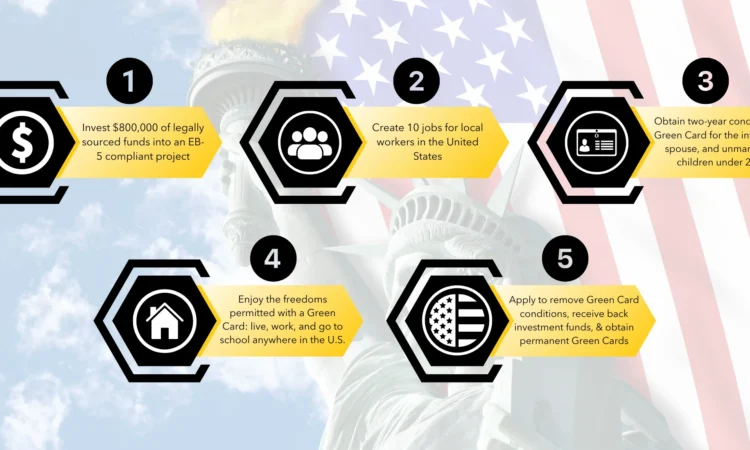
To qualify, an investment must meet specific criteria. The standard minimum investment is $1,050,000. However, this amount is reduced to $800,000 if the project is located in a Targeted Employment Area (TEA). A TEA is either a rural area or an area with high unemployment. Beyond the financial commitment, the most critical requirement is job creation. The investment must lead to the creation of at least 10 full-time jobs for U.S. workers within a two-year period. This ensures that the investment contributes directly to the U.S. economy.
Types of EB5 Investment Projects
Investors have several options when selecting a project, each with its own structure and set of considerations. The primary distinction is between investing through a Regional Center or making a direct investment.
1. Regional Center Projects
Most EB-5 investors choose to invest through a USCIS-designated Regional Center. These are economic units, public or private, that promote economic growth in a specific geographic area. Regional Centers pool capital from multiple EB-5 investors to fund larger-scale projects.
A key advantage of this model is how job creation is calculated. Regional Center projects can count both direct and indirect jobs toward the 10-job requirement. Indirect jobs are those created collaterally as a result of the investment. This flexibility often makes it easier to meet the job creation mandate. Furthermore, Regional Centers typically have a portfolio of pre-vetted projects, simplifying the selection process for investors.
2. Direct EB5 Investment Projects
A direct investment involves an investor funding their own new commercial enterprise or investing directly into an existing business. With this approach, the investor often takes a more hands-on management role. Unlike Regional Center projects, direct investments can only count direct employees (those on the company’s payroll) to meet the job creation requirement.
This option is often favored by entrepreneurs who want to actively run a business in the U.S. While it offers more control, it also carries more responsibility. The investor is solely responsible for ensuring the business complies with all EB-5 program rules, including the stringent job creation targets.
3. Rural vs. Urban EB5 Projects
The EB-5 Reform and Integrity Act of 2022 introduced new incentives for investing in certain types of projects. It created “set-aside” visas for investors in rural projects, high-unemployment TEAs, and infrastructure projects. Rural EB-5 investment projects, in particular, have gained significant attention because they qualify for priority processing of I-526E petitions and have a dedicated pool of visas reserved for them each year. This can lead to a much faster path to a Green Card for investors from countries with visa backlogs. Urban projects in high-unemployment TEAs also benefit from set-aside visas, offering another strategic option for investors.
How to Choose the Right EB5 Investment Project
Selecting a suitable project is perhaps the most critical decision in the EB-5 process. It impacts both your immigration success and the security of your capital. A thorough due diligence process is essential.
1. Evaluating Project Viability
Before committing funds, you must carefully assess the project’s business plan, financial projections, and overall feasibility. Is the project backed by a reputable developer with a strong track record? Does the economic model convincingly show how it will create the required number of jobs? Answering these questions helps you gauge the project’s likelihood of success and its compliance with USCIS requirements. Look for projects that already have I-956F approval from USCIS, as this indicates the business plan has been reviewed and accepted.
2. Understanding Risk Factors
Every investment carries risk, and EB-5 projects are no exception. The two primary risks are immigration risk (the project fails to create enough jobs) and financial risk (the project fails, and you lose your capital). To mitigate these risks, seek projects with a clear exit strategy for returning your capital after the required sustainment period. You should also analyze the capital structure; a project with a high proportion of developer equity can indicate a greater commitment to success. Partnering with experienced immigration attorneys and financial advisors is crucial for navigating these complexities.
3. Working with Regional Centers
If you choose the Regional Center route, vetting the center itself is as important as vetting the project. An established Regional Center with a long history of successful projects and a 100% I-526 and I-829 approval rate offers a higher degree of security. Ask for their track record of capital repayments to investors. Transparency and a history of successful outcomes are strong indicators of a reliable partner for your EB-5 journey.
Benefits of EB5 Investment Projects
The primary benefit of participating in the EB-5 program is securing a U.S. Green Card, which grants permanent residency. This status allows you and your family to live, work, and study anywhere in the United States. Your spouse and unmarried children under the age of 21 can also receive Green Cards as part of your application.
This pathway offers a level of freedom and flexibility that many other visa categories do not. There are no sponsorship requirements from an employer, nor are there specific requirements for age, education, or language proficiency. Beyond the immigration benefits, a successful project can provide a financial return on your investment. Most importantly, your investment actively contributes to the U.S. economy by creating jobs for American workers, fostering a sense of contribution to your new home country.
Challenges and Risks in EB5 Investment Projects
The EB-5 process is not without its difficulties. The legal and financial landscapes are complex, and navigating them requires careful planning. One of the main challenges is proving that your investment funds were lawfully sourced. USCIS requires extensive documentation tracing the path of your capital, a process that can be time-consuming and intricate.
As mentioned, investment risk is another significant factor. There is no guarantee that a project will be successful or that your capital will be returned. Changes in market conditions or poor project management can jeopardize both the financial and immigration aspects of your endeavor. To overcome these hurdles, it is vital to assemble a team of experienced professionals, including an immigration attorney and a financial advisor. Their expertise can help you navigate USCIS requirements, conduct proper due diligence, and select a low-risk project.
Future Trends in EB5 Investment Projects
The EB-5 program is dynamic, with legislative changes and market forces shaping its future. The Reform and Integrity Act of 2022 has already had a major impact, increasing program integrity and introducing measures that benefit investors, such as the ability for those already in the U.S. on another visa to file for adjustment of status concurrently.
The new visa set-asides have spurred a significant trend toward rural EB-5 investment projects, as investors seek to take advantage of priority processing and avoid backlogs. We can expect this focus on rural and other TEA projects to continue. As the program evolves, staying informed about regulatory updates and market trends will be key for prospective investors looking to make strategic decisions that align with their immigration timelines and financial objectives.
FAQs About EB5 Investment Projects
1. What is the minimum investment required for EB5 projects?
The minimum investment is $800,000 for a project located in a Targeted Employment Area (TEA), which can be a rural area or a high-unemployment urban area. For projects outside a TEA, the minimum is $1,050,000.
2. How long does the EB5 process take?
Processing times vary depending on factors like the investor’s country of origin and whether they invest in a set-aside category. Investing in a rural project may lead to faster processing due to dedicated visa numbers and priority adjudication by USCIS.
3. Can family members be included in the EB5 application?
Yes. Your spouse and unmarried children under the age of 21 are eligible to receive Green Cards as your dependents.
4. What industries are best for EB5 investments?
Real estate development, including residential and hospitality projects, has traditionally been the most popular industry for EB-5 investments due to its capacity for significant job creation. Healthcare and infrastructure are also strong sectors.
5. Are there risks involved in EB5 investment projects?
Yes, all investments carry risk. The main risks are immigration risk (failing to meet job creation requirements) and financial risk (loss of capital). Thorough due diligence and working with reputable partners are the best ways to mitigate these risks.
Conclusion
The EB-5 journey is about more than just capital; it’s about a secure future. By aligning your investment with high-quality real estate projects and leveraging modern real estate investment insights, you can navigate the complexities of USCIS with confidence.
Embarking on the EB-5 journey is a significant undertaking that offers the life-changing reward of permanent U.S. residency. The key to a successful outcome lies in carefully selecting the right investment project that not only meets all USCIS requirements but also aligns with your personal risk tolerance and financial goals.
With a clear understanding of the options and a commitment to thorough due diligence, you can confidently move forward. To ensure a smooth and successful experience, we strongly encourage you to consult with a team of experienced immigration and investment professionals. Explore your EB-5 opportunities today and take the first step toward your future in the United States.


