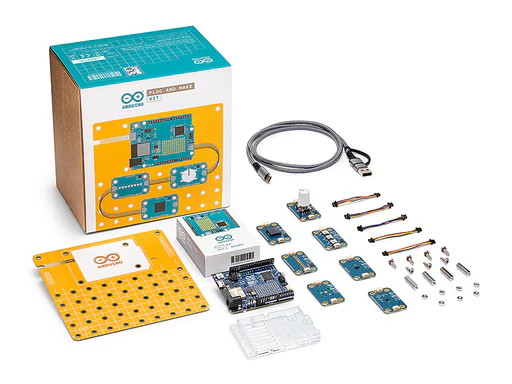
The Growing Popularity of Arduino Kits in the United States
In recent years, the United States has witnessed a surge in the popularity of Arduino kits. These open-source electronic platforms have captivated the imagination of hobbyists, educators, and budding engineers alike. As technology continues to intertwine with everyday life, the necessity for foundational knowledge in electronics and programming has become increasingly evident. Arduino kits provide an accessible entry point for individuals of all ages to delve into the world of electronics.
Arduino, an Italian invention, was initially designed to help students and professionals create interactive projects. Its success lies in its simplicity and versatility, which enables users to create a multitude of projects ranging from basic circuits to complex robotics systems. The platform’s open-source nature means that users have access to a vast repository of resources, including tutorials, forums, and libraries, which support project creation and troubleshooting.
One of the key demographics driving the growth of Arduino kits in the United States is young learners between 12 to 14. This age group is particularly inclined towards hands-on and interactive learning experiences. Arduino kits are excellent electronic kits for kids aged 12-14, fostering an early interest in STEM (Science, Technology, Engineering, and Mathematics) fields. These kits allow students to learn by doing, engaging them in a way traditional textbooks cannot.
Educational institutions have started to integrate Arduino-based projects into their curricula, recognizing the platform’s potential to enhance learning. Teachers report increased student engagement and understanding when lessons are supplemented with Arduino-based projects. The kits’ affordability also makes them an attractive option for schools with limited budgets, allowing educators to equip entire classrooms without excessive expenditure.
Beyond education, Arduino kits have sparked a maker movement across the United States. Makerspaces, community centers focused on hands-on creation, have proliferated, offering workshops and resources for individuals to explore Arduino projects. These spaces promote innovation and collaboration, providing a platform for creators to share ideas and work on communal projects.
The impact of Arduino kits extends to the startup ecosystem as well. Many tech startups have their roots in Arduino-based prototypes, demonstrating the platform’s potential as a springboard for innovation and entrepreneurship. With the growing interest in the Internet of Things (IoT), Arduino’s adaptability makes it ideal for prototyping IoT devices, further cementing its role in technological advancement.
In conclusion, the rise of Arduino kits in the United States is a testament to the increasing demand for accessible, hands-on technology education. As more individuals and institutions embrace these kits, the potential for innovation and learning continues to expand. Whether in the classroom, a makerspace, or a garage, Arduino kits are inspiring the next generation of inventors and engineers, shaping the future of technology one project at a time.