
If you suffer from neck pain caused by a damaged or degenerated disc in your cervical spine (the upper part of your spine), you may be considering surgery as a treatment option. However, not all surgeries are the same, and you may have heard of two different procedures: cervical disc replacement and fusion surgery.
What are the differences between these two surgeries, and which one is better for you? In this article, we will compare and contrast cervical disc replacement and fusion surgery, including their goals, techniques, advantages, disadvantages, and other considerations.
What Is Cervical Disc Replacement?
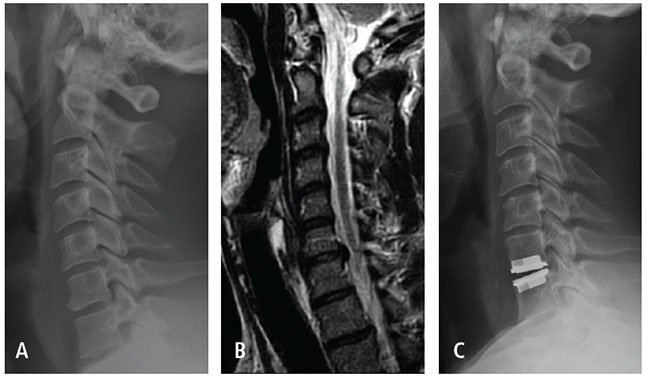
Cervical disc replacement, also known as artificial disc replacement or total disc arthroplasty, is a surgical procedure that aims to replace a damaged or degenerated disc with an artificial disc implant. The primary goal of cervical disc replacement is to maintain motion and flexibility in the treated segment of the cervical spine.
This procedure is often recommended for patients with symptomatic disc herniation or degenerative disc disease who have not responded to conservative treatments such as medication, physical therapy, or injections.
During cervical disc replacement surgery, the affected disc is carefully removed through a small incision in the front of the neck, and an artificial disc implant is inserted between the adjacent vertebrae. This implant is designed to mimic the natural disc’s function, allowing for continued movement and shock absorption3.
By preserving motion, cervical disc replacement may potentially reduce stress on adjacent discs and possibly lower the risk of future degeneration. Cervical disc replacement may also have some advantages over fusion surgery, such as faster recovery, less pain, less blood loss, less need for revision surgery, and better range of motion5.
However, cervical disc replacement may also have some drawbacks, such as longer surgery time, higher cost, higher risk of infection or implant failure, limited availability of implants or surgeons, and uncertainty about long-term outcomes.
What Is Fusion Surgery?
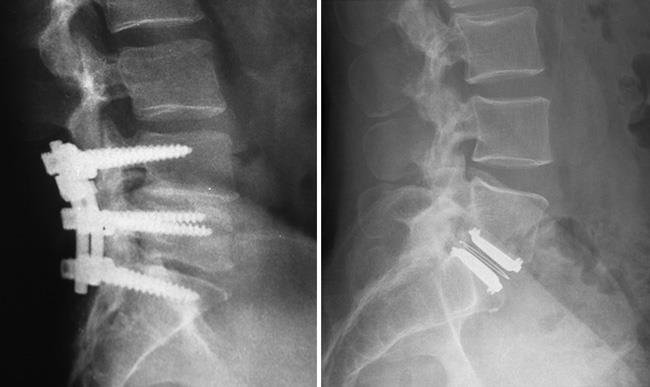
Fusion surgery, also known as spinal fusion or arthrodesis, is another surgical technique used to treat cervical spine conditions. The goal of fusion surgery is to stabilize the affected area of the spine by fusing two or more vertebrae together. Unlike cervical disc replacement, fusion surgery eliminates motion at the treated spinal segment.
Fusion surgery is often considered as a standard treatment for various spinal disorders such as spinal stenosis (narrowing of the spinal canal), spondylolisthesis (slippage of one vertebra over another), scoliosis (curvature of the spine), or spinal fractures. Fusion surgery may also be used to treat severe cases of disc herniation or degenerative disc disease that cause instability or nerve compression.
During fusion surgery, the damaged disc is removed through a small incision in the front or back of the neck (depending on the location of the problem), and bone graft material is placed in the empty disc space. This graft material serves as a bridge between the adjacent vertebrae, encouraging them to grow together and form a solid fused segment over time. Additionally, plates, screws, or rods may be used to provide additional stability during the healing process.
By eliminating motion at the treated level, fusion surgery may provide pain relief by reducing inflammation and irritation of the nerves. Fusion surgery may also restore spinal alignment and prevent further deterioration of the spine.
However, fusion surgery may also have some disadvantages compared to cervical disc replacement such as longer recovery time (up to six months), more pain (especially at the bone graft site), more blood loss (especially if done from the back), more need for revision surgery (due to nonunion or adjacent segment degeneration), and reduced range of motion (especially if multiple levels are fused).
How to Choose Between Cervical Disc Replacement and Fusion Surgery?
The choice between cervical disc replacement and fusion surgery depends on several factors such as your age, health condition, preference, expectations, and surgeon’s recommendation.
Here are some general guidelines that may help you decide which option is better for you:
Cervical disc replacement may be a better option for you if:
- You are younger than 60 years old and have good bone quality.
- You have only one or two levels of disc degeneration in your cervical spine.
- You have no signs of spinal instability, stenosis, infection, or deformity.
- You value motion preservation and want to avoid the potential complications of fusion surgery.
- You are willing to pay more for the surgery and accept the possible risks of implant failure or infection.
Fusion surgery may be a better option for you if:
- You are older than 60 years old or have poor bone quality.
- You have more than two levels of disc degeneration in your cervical spine.
- You have signs of spinal instability, stenosis, infection, or deformity.
- You are not concerned about motion loss and want to achieve spinal stability and pain relief.
- You are looking for a more affordable and established surgery and accept the possible risks of nonunion or adjacent segment degeneration.
Ultimately, the best way to choose between cervical disc replacement and fusion surgery is to consult with a qualified spine surgeon who can evaluate your specific condition and recommend the most suitable treatment option for you.
Your surgeon can explain the pros and cons of each procedure, answer your questions, and help you make an informed decision.
Conclusion
Cervical disc replacement and fusion surgery are two different surgical techniques that can be used to treat neck pain caused by a damaged or degenerated disc in your cervical spine.
Both procedures have their own advantages and disadvantages, and the choice between them depends on various factors such as your age, health condition, preference, expectations, and surgeon’s recommendation. Therefore, it is important to do your research, weigh your options, and consult with a qualified spine surgeon before deciding which procedure is better for you.


