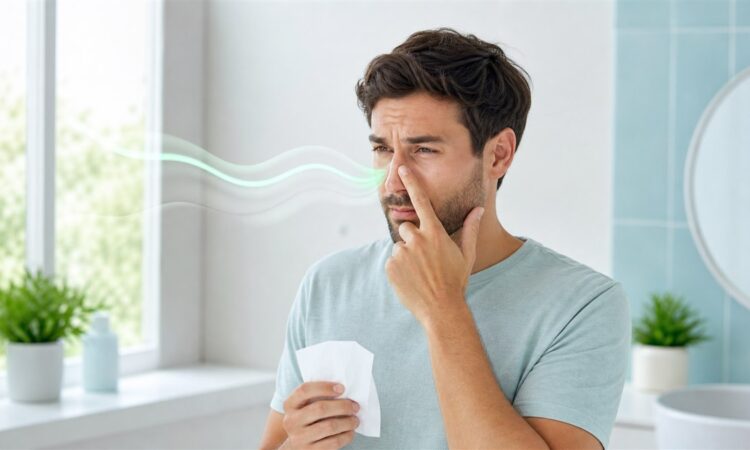
A bad smell that seems to come from inside the nose is not always something that can be “washed away.” It may come from real material in the nose or mouth, a sinus or dental problem, or a change in how the brain processes smell. Parosmia makes familiar odors smell distorted or foul; phantosmia creates an odor sensation when no odor is present.
Gentle self-care may help dryness, congestion or minor irritation, but persistent or unexplained symptoms need medical assessment. Do not put essential oils, bleach, peroxide, vinegar or concentrated chemicals inside the nose.
First identify what “bad smell” means
Ask whether other people can smell it, whether it appears in one nostril or both, and whether it follows a cold, COVID-19, allergy flare, dental problem, head injury or new medicine. Also note congestion, discharge, facial pain, reduced smell, fever, headache, bleeding or a foreign-body possibility.
The National Institute on Deafness and Other Communication Disorders explains that parosmia is a distorted response to an odor, while phantosmia is sensing an odor that is not present. An ear, nose and throat clinician can assess smell disorders and search for an underlying cause.
Low-risk steps that may help
- Drink enough fluid and avoid smoke or strong chemical fumes.
- Use a plain saline nasal spray as directed to moisturize dry passages.
- Run a clean humidifier if indoor air is dry, following its cleaning instructions.
- Brush teeth and tongue, floss gently and keep dental appointments.
- Write down triggers and timing instead of repeatedly sniffing harsh products to test smell.
Bad breath can be mistaken for a nasal odor. DeepTechy’s guide to bad breath causes and care explains why oral hygiene, dry mouth, gum disease and other conditions deserve consideration.
Use nasal rinses safely
A saline rinse can loosen mucus and allergens, but the water must be safe. The FDA nasal-rinse guidance and CDC safe-rinsing instructions say to use distilled, sterile, or previously boiled and cooled water. Water that is safe to drink is not automatically safe to put into the nose. Rare but fatal infections have followed rinsing with contaminated tap water.
Use a clean device, prepared saline and the manufacturer’s instructions. Wash and dry the device after use. Stop and seek advice if rinsing causes worsening pain, bleeding, fever or headaches. People with a weakened immune system should ask a clinician before using an irrigation device. A fine saline mist may be more comfortable than a full rinse for simple dryness.
Common possible causes
Congestion or sinus inflammation
Colds, allergies and sinus inflammation can trap thick mucus and reduce airflow. Facial pressure, congestion and colored discharge can occur, but color alone does not prove a bacterial infection. Severe or persistent symptoms require assessment rather than repeated home mixtures.
Parosmia after an infection
Smell recovery after a viral infection can be uneven. Coffee, onions, eggs, perfume or smoke may suddenly smell burnt, rotten or chemical. This is a real sensory change, not proof that material is stuck in the nose. Avoid dangerous “detox” treatments.
Phantosmia
A person may smell smoke, chemicals or decay when no source is present. Causes range from nasal disease and infection recovery to migraine, medicine effects, head injury and less common neurological conditions. Because the list is broad, diagnosis should come from a clinician.
Dental or mouth problems
Decay, gum infection, tonsil stones or dry mouth can produce an odor perceived near the nose. DeepTechy’s oral health overview and guide to professional dental cleaning provide useful background, but pain, swelling or a bad taste should prompt dental care.
A foreign object
A one-sided foul discharge in a child can occur when a small object is lodged in the nose. Do not probe with tweezers or cotton swabs, which can push it deeper. Seek prompt medical care. Button batteries are emergencies because they can rapidly injure tissue.
When to make a routine appointment
Contact a clinician when the sensation lasts more than a couple of weeks, keeps returning, started after a head injury, affects eating or safety, or comes with ongoing congestion, facial pain, dental symptoms or medicine changes. Bring a symptom timeline and a list of medicines and supplements.
Snoring, mouth breathing and nasal obstruction in a child deserve pediatric attention. DeepTechy’s article about pediatric obstructive sleep apnea describes related sleep warning signs, though it does not diagnose a smell problem.
Red flags needing urgent care
- New weakness, facial droop, trouble speaking, confusion or seizure.
- A sudden severe headache, especially with neurological symptoms.
- Breathing difficulty or rapidly increasing facial swelling.
- High fever with severe facial pain, eye swelling or vision change.
- Clear watery drainage after significant head trauma.
- Suspected button battery or chemical exposure in the nose.
- Severe headache, fever, vomiting or confusion after nasal rinsing.
Call the emergency number for your region when neurological or breathing symptoms appear. Do not drive yourself if you are confused, faint or visually impaired.
What a clinician may check
The visit may include the nose, mouth, teeth and ears; a review of recent infections and medicines; and a basic neurological examination. An ENT specialist can perform formal smell testing or nasal endoscopy when appropriate. Imaging or laboratory tests are not required for everyone and depend on the history and findings.
Keep a useful symptom record
For one or two weeks, record when the smell appears, how long it lasts, whether it is one-sided, and which real odors trigger it. Note congestion, discharge, facial pressure, headache, dental pain, fever, reduced taste, recent infections and any effect on appetite or sleep. List medicines and supplements with start dates. This record can show whether the problem is constant, linked to a trigger, or improving.
Do not repeatedly expose yourself to smoke, solvents, perfume or spoiled food to test the symptom. Install and test working smoke and carbon-monoxide alarms so a phantom-smell concern does not cause you to ignore a real environmental hazard. If anyone else notices smoke, gas or a chemical odor, leave the area and follow local safety guidance.
Smell training is different from masking
Some clinicians recommend structured smell training for persistent loss or distortion after infection. It involves calmly smelling a small set of familiar, safe odors on a regular schedule and tracking perception. Evidence and protocols vary, so ask an ENT clinician whether it fits your situation, especially if symptoms followed head injury or come with neurological signs.
Smell training is not the same as pouring fragrance or essential oil into the nose. Odor samples stay outside the nostril, are not swallowed, and should not be used when they trigger asthma, allergy or nausea. Strong air fresheners may hide a real household odor and can worsen irritation. The goal is measured sensory rehabilitation under appropriate advice, not overpowering the sensation.
Protect nutrition and everyday safety
Parosmia can make protein foods, coffee or cooked vegetables hard to tolerate. Choose safe alternatives with similar nutritional value, serve foods cool if heat intensifies odor, and ask a dietitian or clinician for help if weight is falling. Check food dates and refrigeration rather than relying only on smell, because altered perception can make spoiled food harder to detect. Ask another trusted person to verify gas, smoke or food odors when necessary.
Frequently asked questions
Can dehydration cause a bad smell in the nose?
Dryness can thicken mucus and worsen mouth odor, but persistent phantom or distorted smells should not be attributed to dehydration without assessment.
Can a sinus infection cause it?
Sinus inflammation can alter smell and produce discharge or pressure. A clinician determines whether infection is present and whether treatment is needed.
Is saline spray safe?
Plain commercial saline spray is generally low risk when used as directed. Full irrigation requires distilled, sterile, or boiled and cooled water and a clean device.
Should I use essential oils?
Do not put concentrated oils in the nose. They can irritate tissue, trigger allergy and be harmful if aspirated or swallowed.
Why do foods suddenly smell rotten?
Parosmia can distort familiar odors, often during recovery from a viral illness. Persistent symptoms deserve clinical advice.
What if only I can smell smoke?
That may be phantosmia. Check for a real fire source first, then seek medical assessment if the sensation recurs or persists.
Can a tooth cause a nasal odor?
Dental decay or infection can contribute to unpleasant odor or taste. Tooth pain, swelling or drainage needs dental review.
How long should I wait?
Minor congestion may settle, but symptoms lasting beyond a couple of weeks, recurring, or accompanied by pain, bleeding or neurological signs should be evaluated.
The safe approach
Use hydration, clean humidification and properly prepared saline only when appropriate. Avoid harsh substances and unsafe tap-water rinses. Clean reusable spray or rinse equipment exactly as directed and never share it. Replace a damaged device rather than improvising with an unclean bottle. Because foul smells can be real odors, parosmia or phantosmia, persistent symptoms are best investigated by a clinician rather than covered up with fragrance. Bring the symptom record to the appointment so patterns are easier to review.