
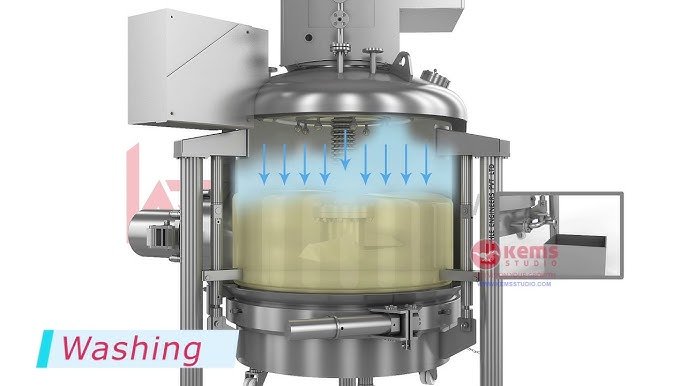
Agitated Nutsche Filter Dryers (ANFDs) have long been a cornerstone in chemical, pharmaceutical, and food processing industries due to their ability to integrate filtration, washing, and drying in a single vessel. As industries evolve, the technology surrounding ANFDs is also undergoing significant advancements to meet the demands of increased efficiency, safety, and regulatory compliance. Understanding future trends in this field is essential for manufacturers looking to optimize production processes and maintain competitiveness in a rapidly changing industrial landscape.
One of the most notable trends is the integration of automation and digitalization in Agitated Nutsche Filter Dryer systems. Advanced sensors, real-time monitoring, and automated process controls are becoming standard features. These innovations allow operators to precisely control agitation speed, temperature, vacuum levels, and washing cycles, ensuring consistent product quality and reproducibility. The digitalization of ANFDs also enables predictive maintenance, where equipment performance is continuously monitored, and potential issues are addressed before they lead to downtime. This proactive approach reduces operational costs and enhances the reliability of production facilities.
Enhanced Automation and Process Optimization
Automation in ANFD technology is evolving beyond basic control systems. Future systems are expected to incorporate artificial intelligence (AI) and machine learning algorithms to optimize the filtration, washing, and drying process. These intelligent systems can analyze historical data and real-time measurements to adjust operational parameters automatically, achieving higher efficiency and lower energy consumption. For example, AI could optimize the agitation pattern to prevent cake compaction or adjust drying temperatures based on material moisture content, resulting in faster cycle times and reduced resource usage.
Improved Materials and Construction
The materials used in ANFD construction are also advancing. Future designs are likely to use more corrosion-resistant alloys, coated surfaces, and high-performance polymers that can withstand aggressive chemicals and abrasive solids. These materials not only extend the lifespan of the equipment but also enhance safety by reducing the risk of leaks, contamination, and mechanical failure. Innovations in filter media, such as sintered metal or advanced polymer composites, are expected to improve filtration efficiency, allow finer particle separation, and reduce maintenance requirements.
Energy Efficiency and Sustainable Operations
Sustainability is becoming a key focus in industrial equipment design, and ANFDs are no exception. Future systems are likely to incorporate energy-saving features such as optimized heating jackets, vacuum-assisted drying, and heat recovery systems. Reducing energy consumption not only lowers operational costs but also aligns with environmental regulations and sustainability initiatives. Additionally, the development of solvent recovery and recycling systems within ANFDs will allow manufacturers to minimize waste and environmental impact while maintaining high-quality product standards.
Enhanced Safety and Containment Features
Safety remains a critical consideration in ANFD design, especially for industries handling toxic, flammable, or pyrophoric materials. Future trends include improved containment systems, such as fully sealed vessels with advanced inerting capabilities and pressure-sensitive interlocks. Automation will also enhance safety by monitoring pressure, temperature, and agitation parameters in real-time, triggering automatic shutdowns in case of abnormal conditions. These improvements will reduce operator risk and help manufacturers comply with stricter safety regulations.
Integration with Industry 4.0 and Smart Manufacturing
As Industry 4.0 principles continue to shape manufacturing, ANFDs are expected to become fully integrated into smart factory environments. Connected systems will enable centralized monitoring, remote operation, and data-driven decision-making. Real-time analytics can optimize production scheduling, detect inefficiencies, and predict maintenance needs, enhancing both productivity and equipment utilization. Digital twins, virtual replicas of ANFDs, will allow operators to simulate and optimize processes without interrupting production, further improving efficiency and reducing trial-and-error testing.
Customization and Scalability
Future ANFDs are expected to offer even greater flexibility to meet diverse production needs. Modular designs, interchangeable components, and scalable vessel sizes will allow manufacturers to tailor systems to specific materials, batch sizes, and process requirements. This adaptability ensures that as production demands change, the same equipment can be upgraded or modified rather than replaced, reducing capital expenditures and downtime.
Regulatory Compliance and Documentation
With increasing regulatory scrutiny in pharmaceuticals and chemicals, future ANFDs will incorporate features that simplify compliance. Automated data logging, audit trails, and process validation tools will ensure that manufacturers meet Good Manufacturing Practices (GMP) and other regulatory standards. These capabilities not only facilitate quality assurance but also provide documentation necessary for regulatory inspections and certification.
In conclusion, the future of Agitated Nutsche Filter Dryer technology is shaped by automation, digitalization, sustainability, safety, and customization. These trends aim to enhance efficiency, reduce operational costs, and improve product quality while meeting stringent regulatory and environmental requirements. Manufacturers who adopt these innovations will benefit from higher productivity, safer operations, and a more adaptable production environment, ensuring that ANFDs continue to play a central role in modern industrial processes.


