
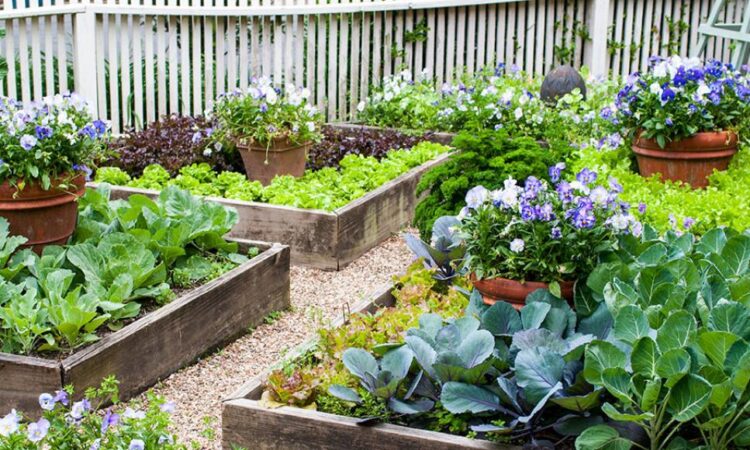
Gardening has many benefits, from providing fresh produce to being a source of exercise and stress relief. However, not everyone has the time or the desire to keep up a conventional vegetable garden. Fortunately, edible landscaping provides a unique and lovely way to include fruits and vegetables in your yard.
Edible landscaping involves designing your yard with ornamental and edible plants. By incorporating fruits, vegetables, and herbs into your landscaping, you can create a beautiful and functional space that provides fresh produce for your family. Here are some ways for getting started with edible landscaping:
1. Start small
If you’re new to gardening or have limited space, start small with a raised planter box or a few containers. Raised planter boxes are an excellent option for edible landscaping as they provide a contained space for your plants and are easy to access for planting, watering, and harvesting. Containers are also a great option, especially for people who want to cultivate plants on a balcony or patio but don’t have much space.
2. Choose the right plants
- When selecting plants for edible landscaping, consider their aesthetic appeal and growing requirements. Some fruits and vegetables are more ornamental than others and can add visual interest to your landscaping. For example, Swiss chard has colorful stems and can be planted in rows to create a beautiful and functional border.
- Other fruits and vegetables that are well-suited for edible landscaping include:
- Blueberries: With their compact size and beautiful foliage, blueberries are an excellent option for edible landscaping.
- Tomatoes come in a wide range of colors and sizes, making them an attractive addition to any yard.
- Herbs: Many herbs have beautiful foliage and can add texture and color to landscaping. For example, Lavender can be grown as a border plant or in a container and has fragrant purple blossoms.
- Cucumbers: Cucumbers have delicate, trailing vines that can be trained to grow up a trellis or along a fence, adding vertical interest to your landscaping.
3. Consider your growing conditions
When planning your edible landscape, it’s essential to consider the growing conditions in your yard. Some plants require full sun, while others do best in partial shade. To ensure the success of your plants, pick ones that are well matched to your growing requirements.
4. Incorporate edible plants into your existing landscaping
Edible plants can be incorporated into your existing landscaping in various ways. For example, you can plant herbs like basil or thyme in between your flowers or use fruit trees as a focal point in your yard. Raised planter boxes can also create a dedicated growing space for your fruits and vegetables.
5. Maintain your edible landscape
Like any garden, your edible landscape will require regular maintenance to thrive. Make sure to water your plants regularly and fertilize them as needed. Prune back any dead or damaged growth, and harvest your fruits and vegetables when they’re ripe.
In conclusion, edible landscaping offers a creative and beautiful way to incorporate fruits and vegetables into your yard. By choosing the right plants, considering your growing conditions, and incorporating edible plants into your landscaping, you can create a functional and attractive space that provides fresh produce for your family. Raised planter boxes are an excellent option for those new to gardening or with limited space, as they provide a contained space for your plants and are easy to maintain. So, get creative and start planning your edible landscape today!


