
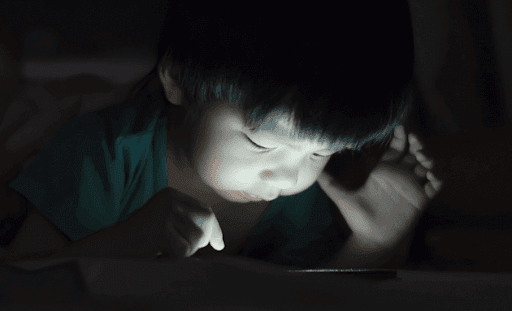
The use of digital multimedia gadgets such as smartphones and tablet computers gives us the ability to provide our children with new methods to learn and be engaged. When they use their televisions, mobile devices, or tablets, children aged 5 to 16 may easily clock in close to six hours of screen time on a daily basis.
However, recent research suggests that introducing young children to a large number of digital gadgets at an impressionable age can result in a variety of developmental problems.
Why Is Screen Time Bad For Your Child’s Eyes?
Blue light, which has a high energy but a short wavelength, scatters more quickly than any other visible color of light and is difficult to concentrate. This visual noise that is not focused causes a reduction in contrast and strains the eye.
Exposure to the high quantities of blue light that are emitted by digital gadgets can, over time, result in eye disorders such as “Digital Eye Strain,” which can be debilitating and even blinding.
Your child’s developing vision is not the only thing that might be harmed by prolonged exposure to blue light from digital gadgets; there are also potential concerns to various other aspects of your child’s health.
Children who stare at screens for an excessive amount of time (usually more than three hours a day) have an increased likelihood of developing eye-related issues, including the following:
Syndrome of the Computer Vision
Computer Vision Syndrome, also known as Digital Eye Strain, refers to a collection of eye-related issues that can arise as a result of prolonged contact to digital screens. Eye strain is quite likely to occur at some point in the lives of children who spend an excessive amount of time on their electronic devices, particularly if they do so in awkward positions or in inadequate lighting conditions. The LEDs used in electronic gadgets generate the maximum quantity of blue light, which may be detrimental to the health of the eyes.
Near-sightedness
Myopia, often known as near-sightedness, is a disorder that can develop in children who spend an excessive amount of time looking at digital devices and who also exercise their eyes. It is a problem that occurs as a result of an extension of the eyeball, which makes it difficult for light entering the eye to concentrate appropriately on the retina. This condition is known as strabismus. This leads to a condition known as near-sightedness, which makes it difficult to see things that are further away.
Dry Eye Syndrome in Children and Adolescents
Children are more likely to acquire dry eye illness as a result of their increased usage of smartphones and other digital gadgets (DED). Studies show that a reduced blink rate during lengthy exposure to electronic devices leads to rapid evaporation of the lubricating tear film, which results in eyes that are dry, itchy, and uncomfortable. Incomplete blinks, in which the upper eyelid does not make contact with the lower eyelid, do not ensure an equal diffusion of the tear film throughout the ocular surface, which in turn causes dry eyes.
Eye Fatigue
When children are completely absorbed in what they are doing, whether it be playing a game or watching anything on their electronic devices, they tend to forget the passage of time. Our eyes need a break from close-up focus every so often, particularly when the blue light from screens causes them to glare and causes strain on the eyes. This causes eye tiredness as well as a lack of concentration. In most cases, it is a transient problem of relatively low severity, and the eyes often readjust themselves to normal within a few hours.
Read more interesting articles at Deep Techy


