People often find it difficult to understand and invest in the stock market. A new retail investor should research the market for a while, scrutinizing stock behavior and observing variances in company strategy and their impact on share prices. One common problem that such newbie investors are burdened with is how to invest in ipo and more importantly how to do ipo analysis.
Well, IPO analysis is not rocket science.If one knowns how to invest in ipo and If they are patient, one may make a lot of money with an IPO in a relatively short period. Tactical and timely judgments can yield very strong results over time. Depending on the equities purchased, this term could be brief or long.
Here, we shed some light on a few IPO guidelines for beginners.
What exactly is an IPO?
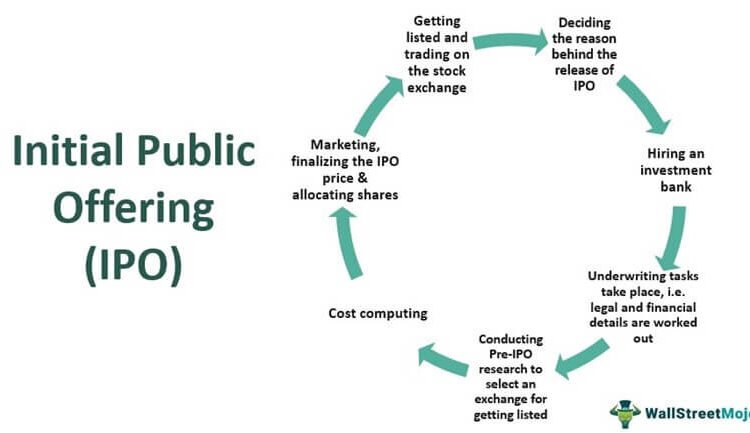
An imminent IPO (Initial Public Offering) refers to the first set of equity shares issued by a previously privately-owned company entity to public investors. When a private business decides to go public through an IPO offering, it is typically underwritten by an investment bank or broker that buys a portion of the firm’s shares at a predetermined price.
As they have never been traded on a stock exchange, there is no historical performance data to use in projecting current stability and future growth. As a result, let us now look at some of the main factors to look at while doing IPO analysis.
IPO Analysis Factors:
1. Red Herring Prospectus (DRHP) draught and more financial research
According to SEBI standards, no business can offer IPO stocks unless the DRHP is released. The prospectus is one of the most genuine ways to learn about a company’s growth potential, market vision, structuring, founders, reputation, and so on. The DRHP is available on the SEBI website, stock exchange websites, and corporate websites. The prospectus has all the information regarding the financial strength of the company.
2. Financial valuation ratios
Traders must know whether the shares being offered in an impending IPO are overvalued, appropriately valued, or undervalued to determine an investment strategy. Use calculations such as the price-to-earnings ratio, the price-to-book ratio, the debt-to-equity ratio, and the return on equity. They should be considered not just for individual companies, but also for portfolio diversification to reduce risk and raise the likelihood of good results.
3. Evaluate growth potential
Stock trading gains are dependent on company growth. As a result, analyze the future development potential of the industry in which the firm works (including relevant upstream and downstream industries) and the company’s prospective market share in the next years. When determining the company’s future market share, consider factors such as its basic business model, present and prospective competitors, investment in technology and innovation, market expansion strategies, competitive advantages, and ability to leverage such strengths further.
4. Management team
It is critical to understand the aims of the company’s promoters and management before investing in fresh future IPOs. Before investing in an IPO, it is critical to establish how much ownership the promoters or management have in the company.
6. Confirm the intended use of the IPO proceeds
Avoid IPOs that use their revenues to repay previous debts, settle old claims and legal difficulties, or simply satisfy working capital requirements. Check the reason for the IPO, whether it is a fresh issuance or an offer-for-sale.
7. Price and dividend
Following the publishing of a prospectus, the business is expected to declare the amount of the offering and the related price band. A price band is a range of prices between the predicted ceiling (highest) and floor (lowest) prices at which the share will be sold.
8. Over-subscription
A company can only offer a certain number of shares through the IPO process. Allocations to certain types of investors are also decided in advance. Frequently, more potential buyers have applied than there are available shares. In some circumstances, you may end up with fewer IPO equities than you applied for, as well as inflated prices that collapse in the long run.
9. Choose a reputable broker
While thinking about how to invest in ipo can be a task, selecting a dependable broker is an even bigger one. This is because appropriate IPO analysis and research require just a little amount of investigation, it is best to choose a broker that can provide accurate advice on which IPO to invest in along with guiding you how to invest in ipo.
10. Measuring institutional investor interest
Unlike retail purchasers, institutional buyers and high net worth individuals (HNIs) can conduct in-depth research on firms because they typically spend huge sums of money in the IPO.
Bottom Line
It is in the best interest of the investors that they do their due diligence and research on the assets they are trying to put their money in. The investor needs to be careful to not get swayed by the marketing tactics of companies and retain focus on verifiable facts.
One common mistake that most new investors make is to buy the IPO just for its listing gains. However, this should not be done. One should only invest in the IPO after doing IPO analysis and after they actually believe in the company. Hence, as a new investor one should first learn about the market and then only invest.