
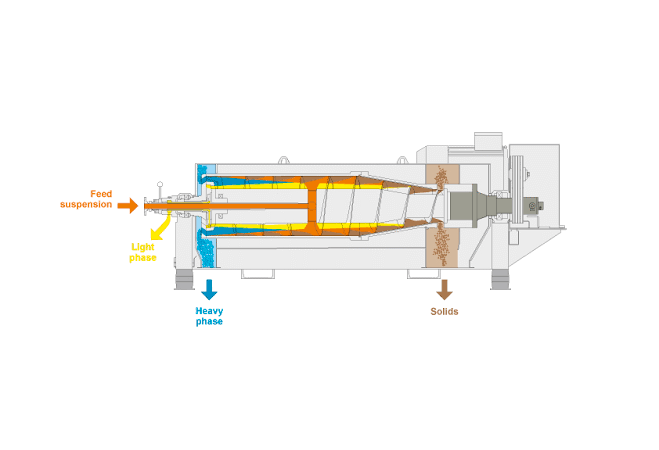
Choosing between OEM and custom-built equipment is a critical decision for businesses that rely on efficient solid-liquid separation. Each option has its own advantages depending on production goals, industry requirements, and operational challenges. Understanding what an experienced manufacturer can provide helps businesses make informed investments that support long-term productivity.
Whether a company needs standardized equipment or a solution designed for a specialized application, working with a decanter centrifuge manufacturer can provide access to engineering expertise, technical guidance, and equipment tailored to specific operational needs. The right approach depends on factors such as processing capacity, material characteristics, and future expansion plans.
Understanding OEM Decanter Centrifuges
OEM (Original Equipment Manufacturer) solutions are standardized machines built according to established specifications. These centrifuges are designed to meet the requirements of a wide range of industries while maintaining consistent quality and performance.
OEM equipment is often suitable for businesses that require:
- Proven and reliable designs
- Faster production and delivery times
- Lower initial investment
- Easy access to replacement parts
- Standard maintenance procedures
For many common industrial applications, OEM models provide dependable performance without requiring extensive modifications.
What Custom Solutions Offer
Not every production process fits within standard equipment specifications. Some industries handle materials with unique properties that require specialized separation systems.
Custom-built decanter centrifuges can be designed to address specific operational challenges, including:
- Higher processing capacities
- Special corrosion-resistant materials
- Unique feed characteristics
- Automated control integration
- Space-saving installation requirements
A customized solution allows businesses to optimize efficiency while meeting precise production demands.
Comparing OEM and Custom Options
Both OEM and custom equipment have clear advantages, and the best choice depends on operational priorities.
| Feature | OEM Solution | Custom Solution |
|---|---|---|
| Design | Standardized | Application-specific |
| Delivery Time | Usually shorter | Typically longer |
| Initial Cost | Lower | Higher |
| Flexibility | Limited | Extensive |
| Process Optimization | General-purpose | Highly optimized |
Evaluating current production needs alongside future business growth helps determine which option offers the best long-term value.
Engineering Expertise Matters
A knowledgeable manufacturer does more than build machinery. Engineering teams analyze operating conditions, material properties, production goals, and environmental factors before recommending the most appropriate equipment.
This technical expertise ensures that the selected centrifuge delivers efficient separation while minimizing energy consumption, wear, and maintenance requirements.
Industry-Specific Applications
Different industries require different centrifuge configurations. Manufacturers often customize equipment to suit applications such as:
- Wastewater treatment
- Food and beverage processing
- Chemical manufacturing
- Pharmaceutical production
- Mining and mineral processing
- Oil and gas operations
Industry-specific designs improve both performance and operational reliability.
Long-Term Support and Maintenance
Whether choosing an OEM model or a customized system, reliable after-sales support remains essential. Manufacturers that provide technical assistance, spare parts, maintenance recommendations, and troubleshooting services help maximize equipment uptime.
Comprehensive support also simplifies routine maintenance and extends the service life of the centrifuge, reducing overall operating costs.
Planning for Future Growth
Businesses often expand production over time. Selecting equipment with future scalability in mind can reduce the need for costly upgrades later.
Custom solutions may offer greater flexibility for future capacity increases, while OEM systems can sometimes be expanded through modular configurations. Discussing long-term production goals with the manufacturer helps identify the most practical solution.
Making the Right Choice
There is no universal answer when deciding between OEM and custom decanter centrifuges. Standard equipment offers affordability, reliability, and quicker deployment, while customized systems deliver greater flexibility and process optimization for specialized applications.
The decision should consider production requirements, budget, maintenance expectations, regulatory compliance, and long-term operational objectives.
Conclusion
OEM and custom decanter centrifuge solutions each serve valuable roles in modern industrial operations. The right choice depends on the complexity of the application, production goals, and future business plans. By working with an experienced manufacturer that understands industry-specific requirements, businesses can select equipment that delivers reliable performance, efficient operation, and lasting value.


