
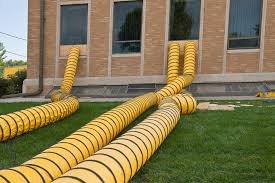
Water damage may appear straightforward—remove the water, dry the space, and move on. But behind every successful restoration project lies a complex blend of science, technology, and professional expertise. Once inside a building, water behaves erratically, and mops and fans alone won’t solve its effects. With advanced tools and scientifically proven methods, RestorePro water damage restoration in Raleigh-Durham, NC delivers precise, data-driven solutions that ensure moisture is thoroughly eliminated and structures are safely restored.
Understanding the science behind water damage restoration reveals why it’s a specialized process that should be handled by trained professionals. From fluid dynamics and evaporation to psychrometry and material science, every step is informed by data and physics to ensure safe, complete recovery.
1. Water Migration And Capillary Action
Water doesn’t simply sit on the surface of a building once it gets inside. It moves rapidly through porous materials like drywall, wood, and insulation. This phenomenon, known as capillary action, allows water to travel upward and sideways, far from its original entry point.
Effective water damage restoration starts with understanding how water migrates through different materials. Professionals use moisture detection tools—such as hygrometers and infrared cameras—to trace moisture beyond what’s visible. This ensures that hidden dampness is not left behind to cause mold or structural damage.
2. The Role Of Psychrometry In Drying
Psychrometry is the science of moisture, air, and temperature—and it plays a central role in drying out buildings. Restorers rely on psychrometric charts to determine how air temperature and relative humidity interact to affect the rate of evaporation.
For drying to be effective, the surrounding air must be warm and dry enough to absorb moisture from wet materials. Restoration experts carefully balance these variables using dehumidifiers, air movers, and heaters to create the ideal environment for evaporation without over-drying or causing secondary damage.
3. Moisture Content And Material Permeability
Different materials hold and release water at different rates. For example, hardwood flooring can retain water deep within its fibers, while non-porous surfaces like tile may dry quickly. Understanding material permeability helps professionals set realistic drying goals.
Restoration teams take baseline moisture readings of undamaged materials and compare them to affected areas. This data guides them in determining when a material is fully dry—not just on the surface, but internally—ensuring that premature rebuilding doesn’t trap moisture inside walls or floors.
4. Controlled Demolition Based On Material Science
When certain materials are too saturated to dry effectively, they must be removed. This includes insulation, carpet padding, and laminate flooring. Professionals in the restoration industry are aware of the materials that can be salvaged and those that should be replaced, as determined by the interaction between water and their structure and components.
This approach avoids unnecessary demolition while still preventing mold growth and material degradation.
5. The Chemistry Of Contaminated Water
Not all water damage is equal. Black water from a sewer backup or greywater from a washing machine overflow are treated differently than clean water from a burst pipe. The category of water contamination determines which safety protocols and cleaning agents are used.
Restorers use EPA-registered disinfectants and antimicrobial solutions to neutralize pathogens and prevent bacterial spread. Understanding the chemical profile of contaminants allows them to choose the right products and methods for effective sanitization.
6. Airflow Engineering And Equipment Placement
The layout of drying equipment is not arbitrary. Restoration professionals calculate airflow paths to ensure consistent drying across all affected surfaces. Air movers are strategically positioned to push moist air off of surfaces, while dehumidifiers capture it from the environment.
This engineered airflow speeds up drying and reduces the risk of mold and odor development.
7. Monitoring Progress With Scientific Precision
Drying isn’t a “set it and forget it” process. Restoration experts monitor progress daily using digital moisture meters, thermal imaging, and psychrometric readings. These measurements allow them to adjust equipment settings and document when areas are fully dry.
By tracking objective data throughout the project, professionals ensure that restoration is complete and verified—not just assumed.
Final Thoughts
Water damage restoration may look like a cleanup job, but it’s deeply rooted in science and precision. From understanding how moisture moves through materials to mastering psychrometrics and sanitization chemistry, professionals rely on evidence-based strategies to deliver safe, effective results. For property owners, this scientific approach provides confidence that the damage has been thoroughly addressed.


