More important than surplus MiGs is the economic pressure being applied to Russia in conjunction with the military pressure applied by Ukraine’s brave resistance. Unfortunately the West is faltering.
Europeans continue to pay cash for Vladimir Putin’s natural gas though, as I and others have argued, they could easily escrow the money until the fighting ends. The idea is not a reach. Something like this is already happening in effect as Russian suppliers have begun offering hydrocarbons on extended credit terms.
Yuriy Vitrenko,
head of Ukraine’s national pipeline company Naftogaz, which continues to deliver Russian gas supplies to Europe despite the war raging around it, lent his voice to the proposal on Monday. He points out how technically unattractive the alternative of shutting down flowing gas wells would be to the Kremlin.
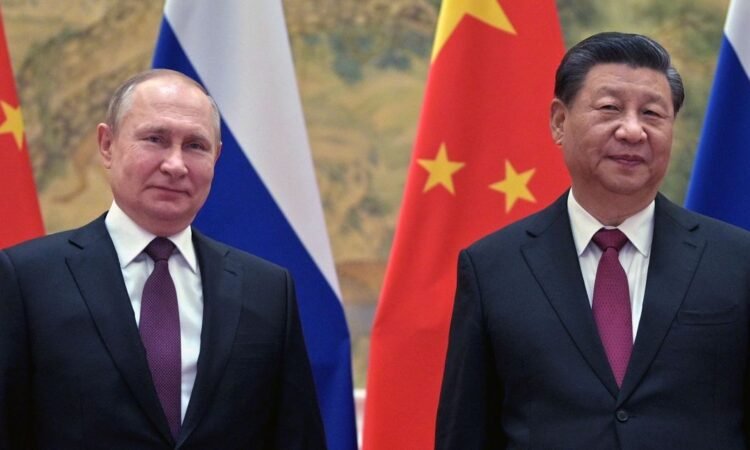
The possibilities are open-ended thanks to the central role of the U.S. dollar in global trade and finance. Barely discernible at this point, however, may be an emerging U.S.-China—I won’t call it an entente, but a shared reluctance to push the Putin regime to the wall.
A sterile conversation about foreign-policy “realism” has popped up in the media, concerning whether the West took Russia’s security concerns seriously enough. Palpably, though, the lack of realism was on the other side. Ukraine is not digestible by Russia, militarily or otherwise. The attempt, if it persists, will only endanger the future of the Russian Federation itself.
The Russian state cannot survive as a giant North Korea. Its regions have too much to gain from their resources and from trade with the outside world. Moscow is too far away. If the permafrost is really less permanent, the tenuous rail and road links that hold Russia together will be sinking in the muck at the very moment the country is being pushed apart by Western sanctions and Mr. Putin’s mismanagement.
Beijing’s radar screen suddenly is filled with visions of instability and risk from the north (good news for Taiwan). Listen closely and the debate in China is quickly becoming how to manage this risk—by doubling down on support of Mr. Putin or by pressuring him to trim his aims in Ukraine. A meeting Monday between the White House’s national security team and senior Chinese diplomats in Rome does not seem to have breathed any certainty that the Chinese have made up their minds.
As we go down this road, let’s be realistic about a few things. Some say it was a mistake to open the door to Ukraine NATO membership while simultaneously saying “not yet.” But this is the hindsight fallacy. Just as arguably, this half-measure deterrent worked until President Obama failed to enforce a red line in Syria. It worked while the unpredictable
Donald Trump
was president.
Joe Biden
certainly pulled out nearly every stop to warn Mr. Putin off his mistake.
Possibly the only way to imagine a peaceful Russia is with NATO or something like it on every border closing the door to regional conflict. Any Ukraine that emerges now, far from being neutralized or disarmed, will have to be bristling with weapons or allies or today’s war will be a down payment on the next.
I’ve cited in the past a paper by economists
Shaun Larcom,
Tim Willems
and
Mare Sarr
on how authoritarians can become trapped in a cycle of growing repression because of the means that brought them to power. This column argued for years that Mr. Putin was on the path to some colossal miscalculation. His regime inevitably was devolving into one driven by one man’s need for survival rather than by any genuine strategic, economic or national interest of the Russian people.
Finally we need some realism on the escalation risks. Nuclear war between the U.S. and Russia is not a good outcome for the Putin clique. His regime may well seek escalation for a different reason, however, and that’s to bring the U.S. to the table and displace Ukraine as its main interlocutor.
A superpower summit in Geneva, played to voters back home as Mr. Putin and the U.S. getting together to divide the world as in the days of yore, may well be the Russian dictator’s plan B, now that any hope of subjugating Ukraine without having to fight a permanent war is receding.
His aim in this respect, alas, might not be unrealistic. Western governments, through a series of provocations, were always reluctant to destabilize the Putin regime for the reasons that now worry the Chinese—what comes next. But realism speaks here too. As long as President
Volodymyr Zelensky
is alive and urging his people to fight on, Presidents Putin, Biden and
Xi Jinping
may be frustrated in their preferred exits from this crisis.
Copyright ©2022 Dow Jones & Company, Inc. All Rights Reserved. 87990cbe856818d5eddac44c7b1cdeb8