
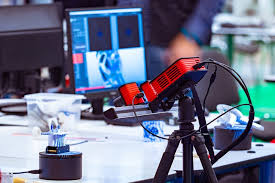
Optical Guidance System are critical components in various technological applications, from aerospace and defense to robotics and autonomous vehicles. Leveraging principles of optics, these systems enhance precision, control, and accuracy in guiding and navigating complex machinery and vehicles. This article explores the fundamentals of Optical Guidance System their key components, applications, and future developments, showcasing their pivotal role in advancing modern technology.
What is an Optical Guidance System?
An optical guidance system is a technology that uses optical sensors and principles to provide precise direction and control for navigating and guiding systems. These systems rely on the detection, analysis, and processing of light signals to determine position, orientation, and movement. Optical Guidance System can be found in a variety of fields, including aerospace, defense, robotics, and automotive technologies.
Key Components of Optical Guidance System
Optical Guidance System consist of several critical components that work together to achieve accurate guidance and navigation:
- Optical Sensors: Optical sensors detect light signals and convert them into electrical signals for processing. Common types include photodiodes, charge-coupled devices (CCDs), and phototransistors. These sensors are essential for capturing data on light intensity, color, and direction.
- Lenses and Mirrors: Lenses and mirrors are used to focus and direct light within the optical system. They play a crucial role in shaping the light beam, enhancing image quality, and improving the accuracy of guidance and navigation.
- Signal Processing Units: Signal processing units analyze the data collected by optical sensors. This involves filtering, amplifying, and interpreting light signals to determine the position, orientation, and movement of the guided system.
- Control Systems: Control systems use the processed optical data to make real-time adjustments and guide the system’s movement. They ensure that the system follows the desired path or trajectory with high precision.
- Calibration Mechanisms: Calibration mechanisms ensure the optical guidance system operates accurately. Regular calibration is essential for maintaining system performance and reliability, accounting for factors such as drift and environmental changes.
Applications of Optical Guidance System
Optical Guidance System are employed in various applications, each benefiting from the precision and versatility of optical technologies:
- Aerospace and Defense: In aerospace and defense, Optical Guidance System are used for missile guidance, aircraft navigation, and space exploration. For instance, guided missiles use optical sensors to track targets and adjust their trajectory in real-time. Similarly, spacecraft utilize optical guidance for precise landing and docking maneuvers.
- Robotics: In robotics, Optical Guidance System enable autonomous robots to navigate and interact with their environment. Vision-based systems, such as cameras and laser sensors, provide robots with information about their surroundings, allowing them to perform tasks such as object recognition, obstacle avoidance, and path planning.
- Automotive Technology: Optical Guidance System are integral to advanced driver-assistance systems (ADAS) in modern vehicles. Systems such as lane-keeping assist, adaptive cruise control, and automatic parking rely on optical sensors to monitor road conditions, detect obstacles, and provide accurate guidance to the driver.
- Manufacturing and Automation: In manufacturing and automation, Optical Guidance System are used for precision alignment and quality control. Machine vision systems inspect and guide manufacturing processes, ensuring that products meet specified standards and tolerances.
- Medical Imaging: Optical Guidance System are also utilized in medical imaging and surgical procedures. Optical coherence tomography (OCT) and endoscopic systems provide high-resolution images for diagnostic and surgical applications, enabling precise interventions and treatments.
Advantages of Optical Guidance System
Optical Guidance System offer several advantages that contribute to their widespread adoption:
- High Precision: Optical Guidance System provide precise measurements and control, essential for applications requiring high accuracy. This precision enhances performance and reliability in various technological and scientific fields.
- Non-Contact Measurement: Many Optical Guidance System operate without physical contact, reducing wear and tear on components and allowing for measurements in challenging or inaccessible environments.
- Real-Time Operation: Optical Guidance System can process and respond to light signals in real-time, enabling dynamic adjustments and immediate feedback for guiding and navigating systems.
- Versatility: Optical Guidance System can be tailored to a wide range of applications, from space exploration to manufacturing, making them versatile tools for various industries and technologies.
- Advanced Imaging: Optical systems can capture high-resolution images and data, providing detailed insights into the guided system’s environment and enabling sophisticated analysis and control.
Challenges and Considerations
Despite their advantages, Optical Guidance System face several challenges and considerations:
- Environmental Factors: Optical systems can be affected by environmental conditions such as dust, fog, and lighting variations. Ensuring reliable performance in diverse and changing environments is a key consideration.
- Complexity and Cost: The design and implementation of Optical Guidance System can be complex and costly. Advanced optical components and precise calibration are required to achieve optimal performance.
- Data Processing Requirements: Optical Guidance System generate large amounts of data that require sophisticated processing and analysis. Efficient data handling and processing capabilities are essential for effective operation.
- Integration with Other Technologies: Integrating Optical Guidance System with other technologies, such as GPS and inertial sensors, can enhance overall performance but may also increase system complexity.
Future Developments in Optical Guidance System
The field of Optical Guidance System continues to evolve with advancements in technology and research:
- Enhanced Sensor Technologies: Advances in optical sensor technologies, such as improved photodetectors and advanced imaging sensors, will enhance the performance and capabilities of Optical Guidance System.
- Miniaturization: The miniaturization of optical components will enable the development of smaller and more versatile guidance systems. This will expand their applications in areas such as wearable technology and micro-robotics.
- Integration with AI and Machine Learning: The integration of artificial intelligence (AI) and machine learning algorithms with Optical Guidance System will enhance their ability to analyze complex data and make intelligent decisions, leading to more autonomous and adaptive systems.
- Advancements in Optical Materials: Research into new optical materials and coatings will improve the performance and durability of Optical Guidance System, allowing them to operate more effectively in challenging environments.
- Space Exploration and Defense: Ongoing developments in space exploration and defense applications will drive innovation in Optical Guidance System, enabling more precise navigation and targeting capabilities.
Conclusion
Optical Guidance System play a crucial role in advancing modern technology by providing precise, real-time guidance and navigation. Their applications span a wide range of fields, from aerospace and defense to robotics and automotive technology. As technology continues to advance, Optical Guidance System will evolve to meet the demands of increasingly complex and dynamic environments, driving innovation and enhancing performance across various industries.


