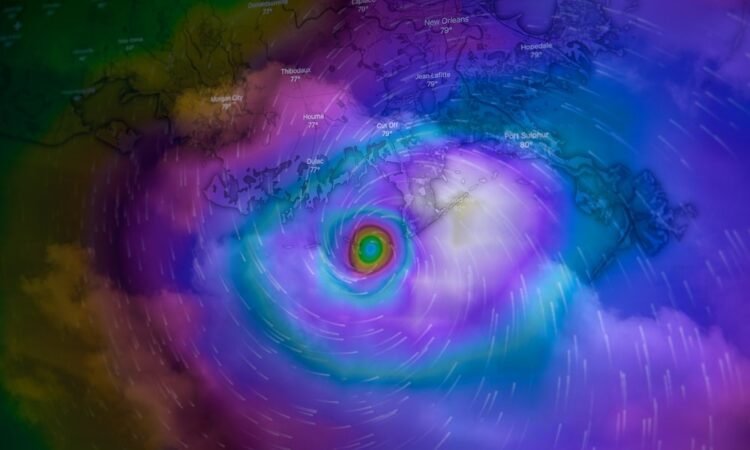
Data from an American study shows that people are about 27 times more likely to be killed during roller-coaster rides than by air turbulence. While severe turbulence that causes injuries is rare, many past occurrences serve as a reminder that the bumps, shaking, and dropping can put even the most seasoned flight attendants, passengers, and pilots on the edge of their seats.
Whether turbulence is anticipated or sudden, pilots must stay calm as they apply the recommended techniques and follow the best practices learned in flight training to reduce the risk of damage or injuries.
They also have to communicate with the cabin crew and make appropriate announcements to ensure the cabin and galleys are secured and everyone is in their seats with fastened seatbelts. Additionally, pilots have to check the autopilot settings and do not fight the turbulence to maintain the altitude or trajectory of the aircraft.
Applying smooth sidesticks and controlling column inputs with variations from the intended flight path can reduce the risk of overcorrection that can lead to unnecessary accelerations, resulting in the risk of injury to the crew as well as the passengers. Also, avoid using a rudder to counter this type of turbulence in manual flights. It can cause additional airplane trajectory, destabilizing and stressing the aircraft structure.
The use of cutting-edge technology, from PIREPs to radars, is significantly helping aircraft fly stable to pass through the skies successfully without much disruption, injuries, or structural damage.
If you’re planning to enroll yourself in advanced flight training to polish your skills or transition to the first officer role in a regional airline, our 1-day, 3-day, and 5-day aircraft simulator training programs at Momentum Flight Training are a fantastic choice! The instructors cover all the basics and train pilots to stay calm as they navigate emergencies and turbulences in a full-service AATD simulator.
The Main Types of Turbulence
#1- Mechanical
This type of turbulence results from friction between the air and the ground, so it usually occurs at lower levels. Mechanical turbulence occurs in unstable air and significantly depends on the wind’s strength as well. Mountain waves found downwind from the ridges are turbulent eddies as they produce severe turbulence concomitant with mechanical agencies.
#2- Thermal
Thermal turbulence results from the earth’s surface being heated unevenly by the sun. Descending cool air and rising warm air causes convective currents in motion. It can be quite intense and more commonly occurs in rain-bearing or cumulonimbus clouds. The thermal currents preventing normal airflow are one of the reasons why many pilots, especially those flying light aviators, try avoiding flying through rain clouds.
#3- Frontal
Fast-moving opposing air masses, known as ‘front’ in weather terminology, are associated with cold fronts that cause the worst frontal turbulence. They can present near the warm front, too, as the moist warm air is unstable. The turbulence can be severe if a thunderstorm develops.
#4- Wind
This refers to the change in wind speed or direction over a particular vertical or horizontal distance that can cause turbulence. Wind shear exists along lows and troughs, around jet streams, and in areas of temperature inversions.
The turbulence can be quite severe when the change in wind direction or speed is pronounced. Turbulence associated with temperature inversions can occur because of radiation cooling, which creates surface-based inversion.
Speedy and horizontal shear causes turbulence associated with troughs and lows. Turbulence can be found along troughs at different altitudes within the lows of altitudes and poleward of lows in the upper and mid altitudes.
Jet streams are the core of robust horizontal winds following a wavelike pattern along with the general flow of wind. It can be found where there are enormous horizontal differences in temperature between cold and warm air masses.
The turbulence can be located along strong isotach gradient zones. It’s most often located on the cyclonic jet stream’s poleward side. Conversely, it’s also frequently located on the anticyclonic jet stream’s equatorward side. And the turbulence gets enhanced by an amplified or arching jet stream around ridges and troughs.
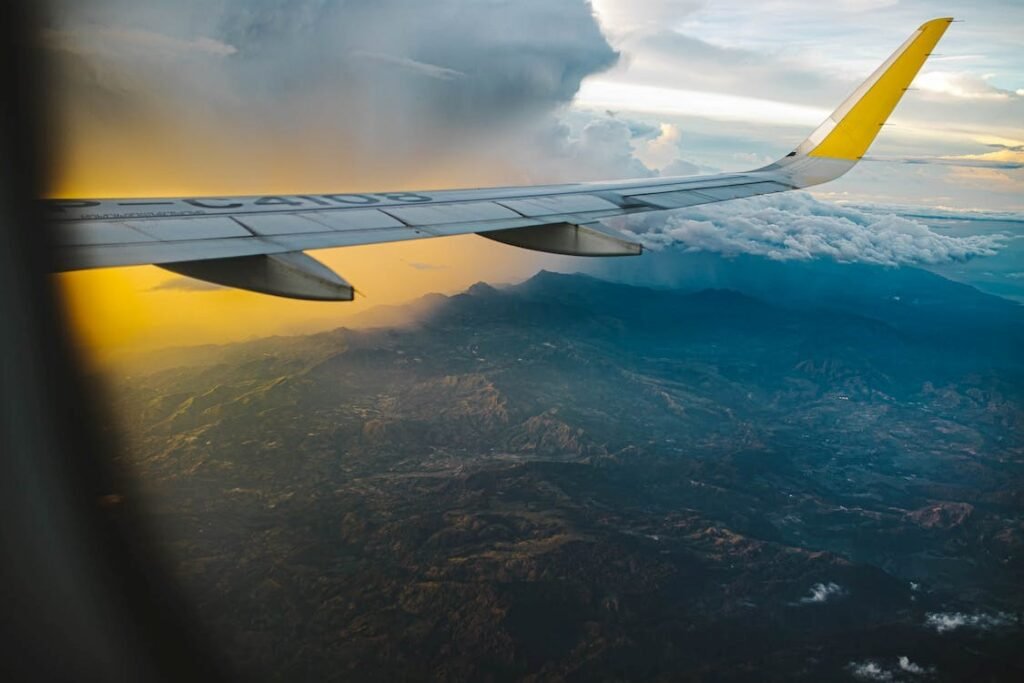
How to Report Turbulence to the ATC
If you ever come across a situation where you have to fly through turbulence, you’ll be equipped to deal with the circumstances like a pro when you practice every move in a simulator.
Instructor-led class discussions and simulation training at Momentum Flight Training prepare aspiring pilots to navigate diverse situations when they begin their careers as first officers in a regional airline.
If you’re looking to transition into regional airlines or want to polish your skills for increased proficiency, reach out to the experts at the training institute for 1-day, 3-day, and 5-day aircraft simulator training programs.
They use a full-service AATD CRJ simulator with realistic systems and components that reflect the environment of the original flight decks of Canadair Regional Jets 200, 550, 700, and 900.
The immensely experienced team of instructors at the institute enrolls only two students per class to help them excel at operational training and familiarize them with all systems, flows, call-outs, and other procedural training.
By the end of the training program, pilots learn how to make proactive decisions about diverse emergencies and maintain aviator control or handle line operations between airports.
Call [833] 427-5876 for more information about the advanced aviation simulator training programs that can be tailored to help you transition into flying a regional aircraft like a pro!
About the Author
Paul’s aeronautics career spans over three decades. He has accumulated 45,000 hours of flight time and worked as a designated FAA examiner after finishing captaincy at a regional airline. He likes to learn about the latest inventions in aviation and reads pilot biographies in his spare time.