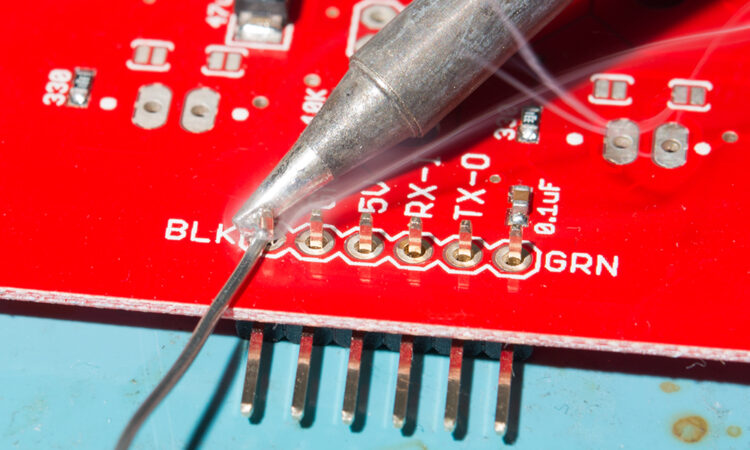
Soldering is a fundamental skill in the world of electronics, and mastering it can take your DIY projects to the next level. However, through-hole soldering can be tricky for beginners. The good news is that with practice and some essential tips, you can easily become a pro! In this blog post, we’ll share everything you need to know about through-hole soldering so that you can create reliable connections and impress your friends with your skills. So grab your soldering iron and let’s get started!
What is Through Hole Soldering?
through hole soldering is a process in which electrical components are mounted on a printed circuit board (PCB) and interconnected using leads that are inserted through holes. The holes are drilled in the PCB to accommodate the leads, and the soldering process joins the lead to the conductivetrace on the PCB.
Through hole soldering is typically used for larger components with moreLeads, such as integrated circuits (ICs), because it provides better support and thermal conduction than surface mount soldering. It is also well suited for applications where reliability is critical, such as in aerospace and military electronics.
There are two main types of through-hole soldering: manual and automated. In manual through-hole soldering, a technician uses a soldering iron to apply solder to the leads of the components being installed. This type of soldering is generally slower and less precise than automated methods, but it can be used for small-scale or one-off projects. Automated through-hole soldering machines use lasers or robotics to place solder on the leads of components, resulting in faster assembly times and greater accuracy.
Essential Tools and Materials Needed for Soldering
If you want to master the art of through hole soldering, you’ll need a few essential tools and materials. Here’s what you’ll need:
– A soldering iron: You’ll need a good quality soldering iron with a fine tip in order to get a clean, precise solder joint.
– Solder: Make sure you get lead-free solder, as it is safer to use than leaded solder.
– Flux: Flux helps to clean the surfaces of the metals you are soldering, and prevents oxidation.
– A heat sink: A heat sink helps to dissipate heat from the area you are soldering, preventing damage to the components
– Tape or clamps: Tape or clamps can help hold your work in place while you solder.
With these essential tools and materials, you’ll be well on your way to mastering the art of through hole soldering!
Step-By-Step Guide to Through Hole Soldering
If you’ve never soldered before, the thought of doing it can be daunting. But don’t worry! This guide will walk you through the process of through-hole soldering step-by-step, so you can get started on your electronics projects.
Before we begin, let’s gather the tools and materials we’ll need:
-Soldering iron
-Solder
-Flux
-Wire cutters
-Masking tape
-Magnifying glass (optional)
-Tweezers (optional)
Now that we have everything we need, let’s get started!
1. Begin by heating up your soldering iron. It’s important to use the correct temperature for your particular project – too hot and you could damage the components, too cold and the solder won’t adhere properly. A good rule of thumb is to start at a lower temperature and increase as needed.
2. While the iron is heating up, apply flux to the area where you will be soldering. This helps the solder flow more easily and prevents oxidation.
3. Once the iron is heated, touch the tip to the component lead and apply solder to both the lead and tip of the iron simultaneously. Continue until a small bead of solder forms around the lead.
4. Remove the iron and allow the joint to cool for a few seconds before moving on to the next one. Repeat until all joints are soldered.
Tips and Tricks for Better Soldering Results
If you want to improve your soldering skills, there are a few tips and tricks you can follow for better results. Here are some essential tips for through hole soldering:
1. Use the right tools and materials. Make sure you have a good quality soldering iron, solder, and flux. You will also need a clean work surface and plenty of ventilation.
2. Prepare your components and PCB. Tin the leads of your components with a little solder before you start soldering them to the PCB. This will make it easier to create a good connection.
3. Don’t overheat the joint. When you’re applying heat to the joint, be careful not to overdo it. Too much heat can damage the component or the PCB.