
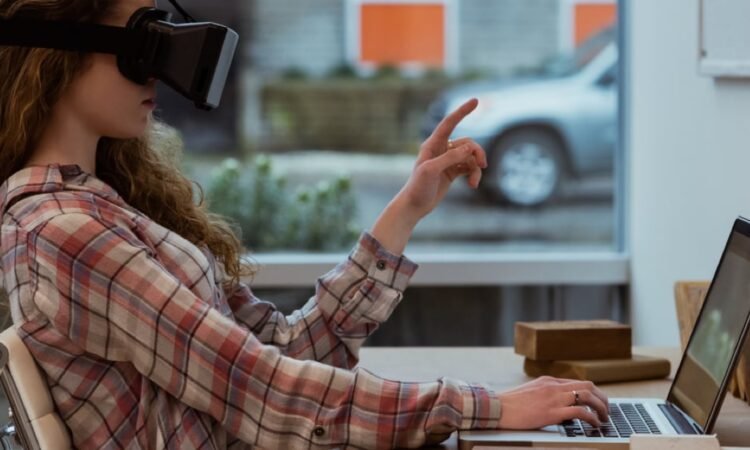
Virtual reality (VR) is a computer-generated simulation of a three-dimensional environment that can be interacted with in a seemingly real or physical way by a person using special electronic equipment, such as a headset with a screen or gloves fitted with sensors.
Augmented reality (AR) is a technology that superimposes a computer-generated image on a user’s view of the real world, providing a composite view. Unlike virtual reality, which creates a completely artificial environment, augmented reality uses the existing environment and adds to it.
Both VR and AR have applications in a wide range of industries, including gaming, education, medicine, and military training.
Importance of e-commerce in today’s world
E-commerce, or electronic commerce, refers to the buying and selling of goods and services over the internet. It has become an increasingly important part of the global economy, as it allows businesses to reach a wider market and allows consumers to shop online from the convenience of their own homes.
There are several advantages to e-commerce for both businesses and consumers. For businesses, it can be a cost-effective way to reach a global market and can potentially reduce the need for physical storefronts and other overhead expenses. It can also allow businesses to collect and analyze data on customer behavior, which can be used to improve marketing and sales efforts.
For consumers, e-commerce provides convenience and access to a wider range of products and services. It can also allow for easier price comparison and the ability to purchase from international sellers.
Overall, e-commerce has had a significant impact on the way that businesses operate and the way that consumers shop, and it is likely to continue to grow in importance in the future.
The potential impact of virtual and augmented reality on e-commerce
Virtual reality (VR) and augmented reality (AR) have the potential to revolutionize e-commerce in several ways.
One of the main ways that VR and AR could impact e-commerce is by providing consumers with a more immersive and interactive shopping experience. For example, VR could be used to create virtual storefronts or showrooms, allowing consumers to browse and shop for products in a virtual environment. This could be particularly useful for products that are difficult to visualize or experience in a traditional online setting, such as furniture or home decor.
AR could also be used to enhance the online shopping experience by superimposing virtual products onto the real world, allowing consumers to see how a product would look in their home or on their body before making a purchase. This could be particularly useful for fashion and beauty products.
In addition, VR and AR could potentially be used for training purposes in the e-commerce industry, such as training employees on how to use new software or equipment.
Overall, the use of VR and AR in e-commerce has the potential to enhance the shopping experience and make it more interactive and immersive, which could lead to increased sales and customer satisfaction.
The current state of virtual and augmented reality in e-commerce
Virtual reality (VR) and augmented reality (AR) are still in the early stages of adoption in the e-commerce industry, but they are beginning to gain traction as more businesses see the potential benefits.
One of the main challenges to widespread adoption of VR and AR in e-commerce is the cost and availability of the necessary hardware. VR typically requires the use of a headset, which can be expensive and may not be widely available to consumers. AR can be accessed through smartphones, which are more widely available, but the technology is still in the process of being developed and refined.
Despite these challenges, there are already some examples of VR and AR being used in the e-commerce industry. For example, some retailers are using VR to create virtual storefronts or showrooms, allowing consumers to browse and shop for products in a virtual environment. Others are using AR to superimpose virtual products onto the real world, allowing consumers to see how a product would look in their home or on their body before making a purchase.
It is likely that VR and AR will become more widely used in e-commerce as the technology continues to develop and become more widely available.
Examples of companies using virtual and augmented reality in e-commerce
There are a number of companies that are using virtual reality (VR) and augmented reality (AR) in their e-commerce operations. Here are a few examples:
- IKEA: The Swedish furniture retailer has been an early adopter of AR in e-commerce, with an app that allows customers to see how furniture would look in their homes before making a purchase.
- Wayfair: The online home furnishings retailer has also embraced AR, with an app that allows customers to see how furniture and home decor would look in their space before making a purchase.
- Sephora: The cosmetics retailer has developed an AR feature that allows customers to virtually try on makeup before making a purchase.
- Ralph Lauren: The fashion retailer has developed a VR experience that allows customers to virtually try on clothes and accessories before making a purchase.
- eBay: The online marketplace has developed an AR feature that allows customers to see how products would look in their homes before making a purchase.
These are just a few examples of the many companies that are using VR and AR in their e-commerce operations. It is likely that we will see more and more businesses adopting these technologies as they become more widely available and easier to use.
Limitations and challenges of implementing virtual and augmented reality in e-commerce
There are a number of limitations and challenges to implementing virtual reality (VR) and augmented reality (AR) in e-commerce.
One of the main challenges is the cost of the necessary hardware. VR typically requires the use of a headset, which can be expensive and may not be widely available to consumers.
AR can be accessed through smartphones, which are more widely available, but the technology is still in the process of being developed and refined. Another challenge is the complexity of implementing VR and AR technology.
It can be difficult and time-consuming to create and maintain virtual or augmented reality experiences, and it requires specialized skills and expertise. There are also limitations to the types of products or industries that VR and AR are suitable for.
It may be difficult to justify the cost and effort of implementing VR and AR for products that are relatively simple or easy to visualize. There are also technical limitations to consider, such as the need for a strong internet connection and the limited field of view in some VR headsets.
Despite these challenges, it is likely that VR and AR will continue to grow in importance in the e-commerce industry as the technology continues to develop and become more widely available.
Predicted advancements in technology and adoption rates
It is difficult to predict exactly what advancements in technology will be made and what the adoption rates will be in the future. However, it is likely that virtual reality (VR) and augmented reality (AR) will continue to develop and become more widely available in the coming years.
One trend that is likely to continue is the increasing use of VR and AR in the gaming industry. As the technology improves and becomes more widely available, it is likely that more and more gamers will adopt VR and AR, leading to an increase in the development of games and other content for these platforms by the ghostwriting services.
It is also likely that VR and AR will continue to be used in a variety of other industries, including education, healthcare, and military training. As the technology improves and becomes more widely available, it is likely that more businesses and organizations will see the potential benefits of using VR and AR and will adopt these technologies in their operations.
Overall, it is difficult to predict exactly what advancements will be made and what the adoption rates will be in the future, but it is likely that VR and AR will continue to be an important part of our lives.
Potential benefits for businesses and consumers
Virtual reality (VR) and augmented reality (AR) have the potential to bring many benefits to businesses and consumers. For businesses, some of the potential benefits include improved training, enhanced customer experience, and increased efficiency.
For consumers, some of the potential benefits include improved convenience, enhanced shopping experience, and access to a wider range of products. It is likely that we will see these technologies become more widely adopted in the future as they continue to develop and become more widely available.
Ethical considerations and potential drawbacks
There are a number of ethical considerations and potential drawbacks to the use of virtual reality (VR) and augmented reality (AR).
One ethical consideration is the potential for VR and AR to be used to manipulate or deceive people. For example, VR could be used to create false or misleading experiences, while AR could be used to superimpose false or misleading information onto the real world. This could potentially have serious consequences, such as affecting people’s decision-making abilities or causing them to act in ways that are not in their best interests.
Another ethical consideration is the potential for VR and AR to be used to invade people’s privacy. For example, VR and AR devices may collect data on users’ activities and locations, which could potentially be accessed by third parties.
There are also potential drawbacks to the use of VR and AR. One potential drawback is the cost of the necessary hardware, which may be prohibitive for some users. There are also potential health risks to consider, such as eye strain and motion sickness.


