
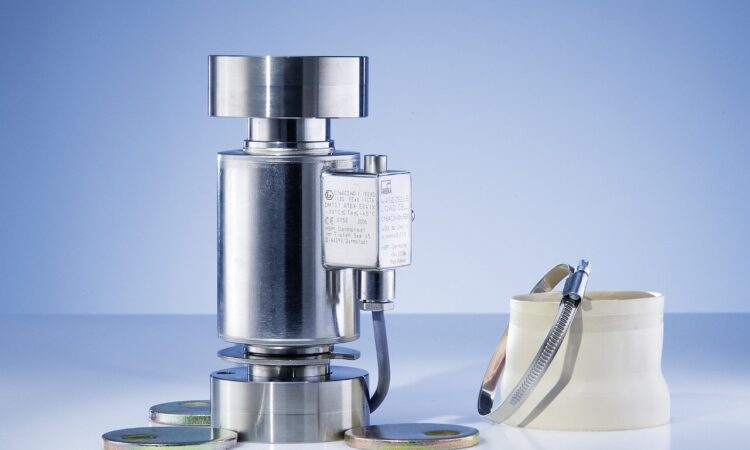
Load cells are devices that convert force into an electrical signal. They are used in a variety of applications such as weighbridges, process control and tension monitoring.
Load cells come in many different shapes and sizes, each designed for a specific purpose. The most common type of load cell is the strain gauge load cell. This type of load cell uses a spring to measure force.
When an object is placed on the load cell, the spring deflects and produces an electrical signal. This signal can then be converted into a weight measurement. Load cells are essential for many industries, and they play a vital role in ensuring accuracy and safety.
Benefits of Load Cells
Here are some benefits you need to know about load cells:
1. Increased accuracy – Load cells are highly accurate, which is essential for many applications such as scientific research, product testing and quality control.
2. Repeatability – Load cells can be used to measure the same force multiple times with high repeatability, making them ideal for use in calibration and testing environments.
3. Wide range of applications – Load cells are used in a wide range of industries and applications, from simple weight measurement to complex force analysis.
4. Wide range of sizes and capacities – Load cells are available in a wide range of sizes and capacities, from very small load cells for delicate force measurement to very large load cells for heavy-duty applications.
5. Durability – Load cells are designed to be durable and withstand harsh environments, making them ideal for use in industrial and outdoor applications.
6. Low maintenance – Load cells require little maintenance and are typically very reliable, meaning they can be used for long periods of time with minimal downtime.
7. Easy to install – Load cells are typically easy to install and can be used with a variety of different types of equipment.
8. Can be used with software for analysis – Load cells can be used with software to perform a detailed analysis of the data they collect, providing valuable insights into the forces at work.
9. Can be used in automated systems – Load cells can be used in automated systems to provide accurate and repeatable measurements.
10. Portable – Load cells are often portable, meaning they can be used in a variety of different locations.
11. Affordable – Load cells are generally very affordable, making them a cost-effective solution for many applications.
12. Safe – Load cells are safe to use and pose no risk to the user or the environment.
13. Environmentally friendly – Load cells are typically made from environmentally friendly materials and do not produce any harmful emissions.
14. Recyclable – Load cells can be recycled, making them a more sustainable option than many other types of equipment.
15. Can be used in hostile environments – Load cells can be used in hostile environments such as extreme temperatures or high-pressure situations.
16. Can be used in explosive environments – Load cells can be used in explosive environments, making them a safe option for many applications.
17. Can be used in vacuum environments – Load cells can be used in vacuum environments, making them ideal for use in space applications.
18. Can be used underwater – Load cells can be used underwater, making them ideal for use in marine applications.
19. Can be used in radiation environments – Load cells can be used in radiation environments, making them ideal for use in nuclear applications.
20. Can be used in hazardous environments – Load cells can be used in hazardous environments, making them ideal for use in many industrial applications.
What are the most common applications where load cells are used?
Here are some of the most popular areas where load cells are used:
- For the weighing of goods in a wide variety of industries;
- In digital bathroom scales and other types of consumer-grade scales;
- For measuring force in machine tools and other industrial machinery;
- In scientific research, for example, to measure gravitational acceleration;
- In process automation, for instance, to measure the flow rate of a fluid;
- In civil engineering, like when measuring the weight of trucks and other vehicles on a bridge;
- In aviation, such as to measure the takeoff weight of an aircraft; and
- Anywhere else where an accurate measurement of force is required.
How long do load cells last?
This is a difficult question to answer, as the lifespan of a load cell can vary greatly depending on its quality, how often it is used and in what conditions it is used. Generally speaking, however, a load cell should last for many years if it is well-maintained and not subject to excessive wear and tear.
Load cells are often used in combination with other devices, such as sensors and data acquisition systems, to provide a complete measurement solution. In many cases, load cells can be used to replace mechanical devices, such as springs or levers, that are typically used to measure force or weight. This can result in a more accurate and efficient measurement process.
If you’re looking for quality and efficient load cells, look no further than Meltrons Australia!


