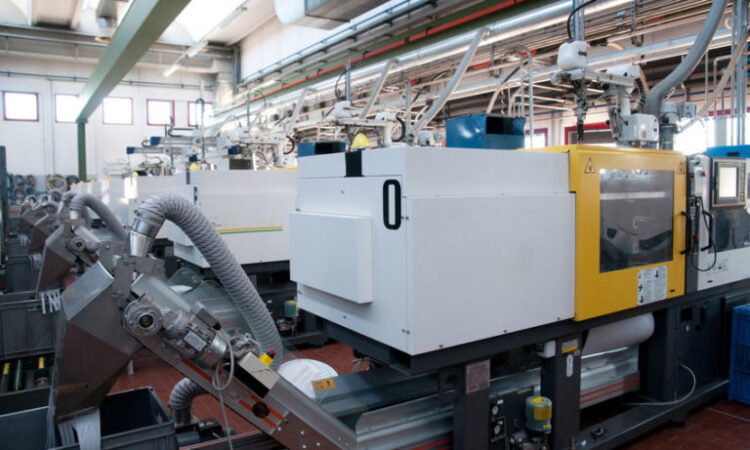
The ideas, concepts, and technological advancements that underpin modern industrial automation and are regarded as being of paramount importance will all be covered in this guide to industrial automation. We will also discuss this technical sector in general.
Intro
Industrial automation may be found in all areas and subsectors of our businesses today. Manufacturing, engineering, building, power generation, and other essential economic operations may all run more effectively and productively thanks to automated technologies.
And because to technologies like artificial intelligence (ai), cloud computing, big data, the internet of things (iot), and others, industrial automation is now seeing a fresh growth surge.
Industrial automation – what is it?
Let’s quickly explore the fundamentals of automation as a concept in order to grasp industrial automation.
The word “automation” refers to a number of technologies, approaches, and instruments used to lessen the need for human involvement in processes, increasing their effectiveness, productivity, and accuracy.
Every aspect of our life is impacted by automation, which has a broad variety of uses from consumer items and home appliances to sophisticated and complicated systems that enable contemporary transport vehicles like aircraft and ships, factories, and even financial industrial robotics automation solution.
Many scientific methodologies and techniques, including the often-combined use of mechanical, hydraulic, electrical and electronic, pneumatic, and computer technologies, may be utilized to automate processes.
What does industrial automation serve as?
The functioning of the contemporary world as we know it depends on industrial automation. The productivity of the task as a whole is continuously and steadily boosted thanks to the use of computers, software, robotics, sophisticated machinery, and control systems.
Automation boosts the economy, enabling it to expand and maintain its competitiveness while bringing important advantages to businesses of all sizes.
According to fortune business insights’ most recent market study, the industrial automation industry will be worth us$179.74 billion globally in 2020. In 2021, it’s projected to grow to $191.74 billion. The industrial automation market is projected to increase at a cagr of 9.2% from 2021 to 2028, reaching $355.44 billion.
Let’s quickly go through the key advantages of industrial automation solutions even if it may seem clear that employing machines, robots, and industrial automation solutions adds value and enables businesses to achieve new, previously unthinkable levels of production and efficiency.
Modern factories and facilities can operate continuously with no downtime thanks to high performance industrial automation systems. All procedures are sped up, assembly times are decreased, and productivity is increased via automated solutions.
Reduced costs
One of the most significant advantages of implementing industrial automation systems is cost savings. Costs of manufacturing have been further decreased by the advent of new technologies like robots, intelligent machines, and ai systems. It raises the value of corporate assets and boosts company profitability.
More consistency and quality
Utilizing automated solutions has the additional benefit of reducing human error and enhancing consistency, which results in higher-quality output and increased stability. While industrial automation systems often have error rates as low as 0.00001%, the average error rate in human operations is 1.15%.
Excellent security
Another significant benefit of the widespread use of industrial automation technology is the enhancement of worker safety and job security. While the use of robots and machines to perform jobs in hazardous and dangerous places helps employees to prevent accidents and to safeguard long-term working health in industrial sectors, the decrease of human error also contributes to the reduction of accidents and injuries.
Increased adaptability
Automation solutions are also intended to increase the adaptability of industrial gear and processes. Organizations are able to quickly adjust to the shifting demands of the market because to the capacity to programmed robots and other machinery.
Rising human capability and value added
Automated solutions are crucial because they enable employees to concentrate on more difficult production tasks by relieving them of boring and repetitive duties. Because of this, integrating strong industrial automation solutions with knowledgeable human resources also results in a notable improvement in human capability.
New heights in data generation and search assistance
An essential component of automation, and specifically of industry 4.0 solutions, is automated data collecting. Innovative technologies that can gather and analyze many sorts of data in real time provide a vast array of potential. They enable businesses to increase waste reduction, traceability, and continuous process improvement.
Predictive maintenance and real-time monitoring
The ability to continuously monitor all operations in real-time mode is one of the most crucial features of industrial automation systems, which is our last point. Because of Today’s industrial equipment include a variety of sensors that make it easy to detect and fix problems and faults in manufacturing operations.
As a consequence, there are less malfunctions, cheaper maintenance costs, and longer equipment life cycles.
What distinguishes dynamic automation from dynamic automation?
You are correct if you think the latter two categories are unclear. Planned automation may be extended in numerous ways via flexible automation. In other words, The degree of freedom that these two categories provide distinguishes them from one another.
Products that use programmable automation are often made to produce a lot of the same kind of thing or carry out a variety of activities with little change. Because of Flexible automation systems are, as the name implies, ubiquitous and adaptable to various activities and requirements.
Automated integration
Fully integrated automation, which is another name for integrated automation, refers to what is truly regarded as the next development in industrial automation systems. In order to achieve higher optimization and minimize the need for human engagement, integrated automation incorporates solutions created to centralize and automate the usage of resources and system administration.
A few examples of integrated automation systems are shown below:
- Programming for a distributed control system
- Applications for computer-aided processes (capp).
- Systems for manufacturing execution (mes)
- Systems that govern production lines
- Solutions for integrating an it environment with software
- Methods for testing production processes
- Automated methods for managing materials
- Methods for coordinating data management
- Automated systems for backup and recovery