
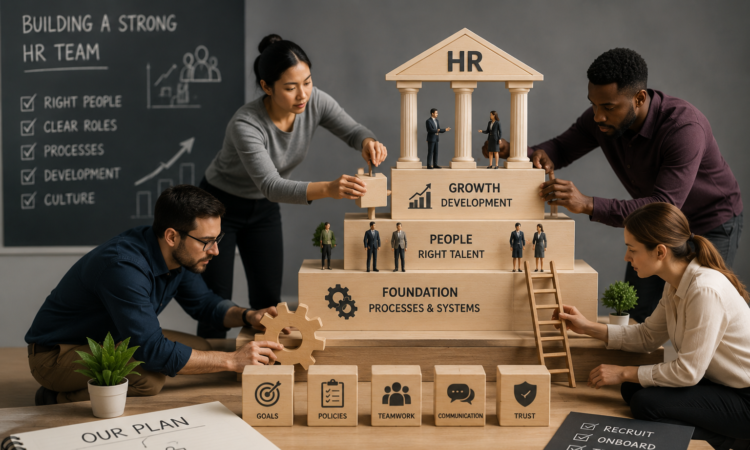
As organizations grow, people-related responsibilities quickly become more complex. Recruiting new employees, maintaining compliance, supporting managers, and fostering employee engagement require dedicated expertise. Yet many businesses begin without a formal HR structure, relying instead on founders, office managers, or department leaders to manage workforce needs.
Eventually, that approach reaches its limits.
Building an HR function from the ground up is not simply about filling positions. It requires thoughtful planning, clear role definition, and alignment with the organization’s long-term objectives. Effective entry level HR hiring often serves as the foundation for creating a scalable and resilient HR team.
Organizations that approach HR team development strategically are better equipped to support growth, improve employee experiences, and navigate future workforce challenges.
Start With Business Goals, Not Job Titles
One of the most common mistakes organizations make is hiring HR personnel without first understanding what the business actually needs.
Identify the Company’s Current Challenges
Before building an HR team, leaders should assess questions such as:
- Is hiring becoming inconsistent or difficult to manage?
- Are managers spending excessive time on administrative tasks?
- Are compliance requirements becoming more complex?
- Is employee turnover increasing?
- Are onboarding and performance processes underdeveloped?
The answers help clarify which HR capabilities require immediate attention.
Define What Success Looks Like
An effective HR structure should support organizational priorities. For example:
- Rapid-growth companies may prioritize recruiting and onboarding.
- Mature organizations may focus on retention and leadership development.
- Businesses expanding geographically may need stronger compliance support.
Starting with business needs ensures that HR investments generate meaningful value.
Build the Foundation With Entry-Level HR Talent
Many successful HR teams begin with individuals who manage essential processes and create operational consistency.
Why Entry-Level Roles Matter
Early HR hires often become the backbone of daily operations by supporting:
- Interview scheduling and candidate communication
- New hire onboarding
- Employee records management
- Benefits administration
- Policy documentation
- Internal HR communications
These responsibilities create the structure necessary for future growth.
The Benefits of Strategic Entry Level HR Hiring
Organizations that invest thoughtfully in junior HR talent can:
- Improve efficiency across administrative processes
- Free senior leaders to focus on strategic priorities
- Develop internal HR talent pipelines
- Maintain consistency during periods of expansion
Entry-level professionals frequently evolve into future HR leaders when given appropriate development opportunities.
Establish Clear HR Roles and Responsibilities
As teams expand, role clarity becomes increasingly important.
Avoid the “Everyone Does Everything” Model
In smaller organizations, HR responsibilities often overlap. While flexibility can be beneficial initially, prolonged ambiguity can lead to:
- Accountability gaps
- Duplicated work
- Employee confusion
- Reduced productivity
Clearly defined responsibilities improve efficiency and collaboration.
Examples of Early HR Roles
Organizations building HR functions often prioritize roles such as:
HR Coordinator
- Supports administrative processes
- Coordinates recruiting activities
- Maintains employee documentation
HR Generalist
- Oversees employee relations
- Supports compliance initiatives
- Assists with performance management
HR Manager
- Aligns HR practices with business goals
- Leads workforce planning initiatives
- Develops policies and procedures
Each role contributes differently to the overall effectiveness of the HR team.
Hire for Adaptability and Growth Potential
Technical skills are important, but emerging HR professionals often succeed because of their ability to learn and adapt.
Key Qualities to Prioritize
When evaluating candidates, organizations should look for individuals who demonstrate:
- Strong communication skills
- Attention to detail
- Organizational capability
- Problem-solving ability
- Professional judgment
- Curiosity and willingness to learn
These attributes support long-term success within evolving HR environments.
Focus on Potential, Not Just Experience
Candidates early in their careers may bring:
- Fresh perspectives
- Strong motivation for development
- Flexibility in changing environments
- High levels of engagement
Balancing current capabilities with future potential can strengthen workforce planning efforts.
Create Processes Before Growth Accelerates
Rapid growth exposes weaknesses in inconsistent systems.
Build Repeatable HR Practices
Even small organizations benefit from establishing processes related to:
- Recruitment workflows
- Candidate communication standards
- Onboarding checklists
- Employee documentation requirements
- Performance feedback expectations
Consistency improves both employee experience and operational effectiveness.
Why Process Matters
Without structure, organizations often experience:
- Delays in hiring decisions
- Administrative errors
- Compliance vulnerabilities
- Frustration among employees and managers
Well-defined processes provide stability as complexity increases.
Invest in Development Early
Building an HR team is not only about hiring talent; it is also about developing it.
Encourage Continuous Learning
Organizations can support HR team growth through:
- Professional certifications
- Leadership training opportunities
- Cross-functional collaboration
- Mentorship relationships
- Exposure to strategic projects
Development investments strengthen internal capabilities over time.
Building Future HR Leaders
Entry-level professionals who receive support and guidance often progress into broader responsibilities, reducing dependence on external hiring for future leadership needs.
This creates continuity and preserves institutional knowledge.
Balance Operational Excellence With Strategic Thinking
As HR teams mature, their focus naturally expands beyond administration.
The Evolution of HR Functions
A growing HR team often progresses through stages:
Stage 1: Administrative Support
- Managing records
- Coordinating hiring logistics
- Processing employee transactions
Stage 2: Employee Support
- Addressing employee concerns
- Supporting managers
- Strengthening onboarding experiences
Stage 3: Strategic Partnership
- Workforce planning
- Leadership development
- Organizational design initiatives
Recognizing these stages helps leaders prepare for future needs.
Avoid Building for Today’s Problems Alone
Organizations should ask:
- What workforce challenges are likely within the next two years?
- What capabilities will future growth require?
- How can today’s hiring decisions support tomorrow’s priorities?
Long-term thinking improves scalability.
Strengthen Collaboration Across the Organization
HR effectiveness depends heavily on relationships with leaders and employees.
Building Credibility Early
HR teams establish trust by:
- Communicating consistently
- Following through on commitments
- Maintaining confidentiality
- Providing practical guidance
Trust increases employee confidence and leadership support.
Partnering With Managers
Managers play a critical role in people decisions. HR professionals can strengthen these partnerships by:
- Clarifying expectations
- Supporting hiring decisions
- Providing coaching resources
- Encouraging accountability
Strong collaboration improves organizational alignment.
Finding the Right Starting Point
There is no universal blueprint for building an HR team. The ideal structure depends on organizational size, industry, growth trajectory, and workforce complexity.
In some cases, businesses seek support from an HR Coordinator recruiter to identify candidates capable of supporting foundational HR operations while adapting to future responsibilities.
Regardless of approach, successful HR teams are built intentionally rather than reactively.
According to the Society for Human Resource Management, organizations that invest in structured people practices are often better positioned to support engagement, productivity, and long-term workforce stability.
Conclusion
Building a strong HR team from the ground up requires more than filling open positions. It involves understanding business objectives, establishing clear responsibilities, investing in development, and creating systems that can evolve alongside organizational growth.
Thoughtful entry level HR hiring provides the operational foundation needed to support employees, strengthen leadership effectiveness, and prepare organizations for future challenges.
By focusing on both immediate needs and long-term capability building, companies can develop HR teams that contribute meaningfully to sustainable organizational success.


