
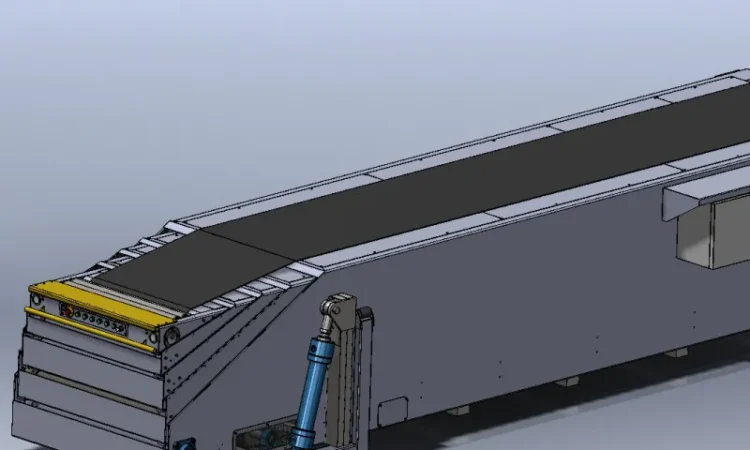
Material-handling systems play a crucial role in warehouse efficiency, manufacturing workflows, and distribution operations. Conveyors are widely used to transport goods quickly and safely within facilities, reducing manual labor and improving productivity. Among the many types of conveyor systems available, telescopic belt conveyors and fixed conveyor systems are two common options used in logistics environments. Each system offers distinct advantages depending on operational requirements, facility layout, and shipment volume.
When evaluating conveyor solutions, businesses often consider flexibility, cost, installation requirements, and long-term performance. A telescopic belt conveyor is designed to extend and retract, allowing it to reach directly into trucks or containers during loading and unloading operations. This feature makes it particularly useful for dynamic warehouse environments where transportation vehicles of different sizes must be handled efficiently. Fixed conveyor systems, on the other hand, are permanently installed along a set path to transport materials between designated points within a facility.
Flexibility and Adaptability
One of the most significant differences between telescopic and fixed conveyor systems is flexibility. Telescopic conveyors can extend outward to reach deep into trailers or containers and retract when not in use. This adaptability allows warehouses to handle different vehicle types and loading dock configurations without requiring multiple conveyor setups.
Fixed conveyor systems are less flexible because they operate along predetermined routes. While they are highly efficient for repetitive internal transport tasks, they cannot easily adjust to changing loading positions or vehicle sizes. Facilities with dynamic shipping operations often benefit more from telescopic systems, while fixed conveyors are better suited for consistent production-line movement.
Installation and Space Requirements
Installation requirements vary greatly between the two systems. Fixed conveyor systems typically require permanent structural installation, including supports, mounting hardware, and sometimes facility modifications. Once installed, relocating them can be difficult and costly.
Telescopic belt conveyors require less permanent infrastructure. They are commonly positioned at loading docks and can retract into a compact footprint when not in use. This space-saving design allows warehouses to maintain open dock areas for forklifts and personnel movement. Facilities with limited dock space often find telescopic conveyors more practical.
Efficiency in Loading and Unloading
Telescopic conveyors are specifically designed to improve truck loading and unloading efficiency. By extending directly into transport vehicles, they minimize the distance workers must move packages manually. This reduces handling time and speeds up shipment processing.
Fixed conveyor systems are typically used for internal material transport rather than direct vehicle loading. While they can connect to dock areas, they do not provide the same reach or adaptability as telescopic systems. For operations focused on high-volume shipping, telescopic conveyors often deliver greater efficiency.
Cost Considerations
Cost is an important factor when choosing between conveyor systems. Fixed conveyors may have lower upfront equipment costs for simple layouts, but installation expenses can increase depending on facility modifications. They are often cost-effective for long-term, repetitive transport tasks within production lines or sorting systems.
Telescopic conveyors usually involve a higher initial investment due to their extendable mechanisms and mobility features. However, they can reduce labor costs and improve loading speed, which may provide long-term financial benefits. Businesses must evaluate both short-term budgets and long-term operational savings when selecting a system.
Maintenance Requirements
Maintenance needs differ between telescopic and fixed conveyor systems. Fixed conveyors generally have fewer moving structural components, which can make maintenance simpler. Routine servicing typically focuses on belts, motors, and rollers.
Telescopic conveyors include extension mechanisms, tracks, and adjustable sections that require additional inspection and lubrication. Although maintenance may be slightly more involved, regular servicing ensures reliable performance and long equipment life. Preventive maintenance programs can help minimize downtime for either system.
Safety and Ergonomics
Worker safety is a key consideration in material-handling operations. Telescopic conveyors reduce the need for manual carrying inside trailers, lowering the risk of lifting injuries and fatigue. Their ability to position the conveyor closer to workers improves ergonomics during loading tasks.
Fixed conveyor systems also improve safety by automating internal transport, but they do not eliminate manual loading inside vehicles. As a result, telescopic systems often provide greater ergonomic benefits in shipping and receiving areas.
Choosing the Right Conveyor System
Selecting between telescopic and fixed conveyor systems depends on the nature of the operation. Warehouses with high shipping volumes, multiple vehicle types, and busy loading docks often benefit from telescopic conveyors. Their extendable design supports faster and safer loading processes.
Facilities focused on continuous internal transport, such as manufacturing plants or automated sorting centers, may find fixed conveyor systems more suitable. These systems provide reliable movement along established production paths.
Conclusion
Both telescopic belt conveyors and fixed conveyor systems play important roles in modern material-handling operations. Fixed conveyors provide dependable internal transport for repetitive workflows, while telescopic conveyors offer flexibility and efficiency in loading and unloading tasks.
Understanding the differences between these systems helps businesses choose equipment that aligns with their operational goals, space limitations, and budget considerations. By selecting the right conveyor solution, warehouses and production facilities can improve productivity, safety, and long-term performance in their logistics operations.


