
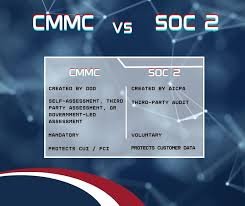
Reading up on compliance doesn’t exactly scream excitement, but when it comes to the Cybersecurity Maturity Model Certification (CMMC), skipping the details can cost companies both contracts and credibility. For defense contractors and suppliers, knowing the real difference between a self-assessment and a full CMMC audit isn’t just helpful—it’s necessary. Especially when aiming for something as serious as a CMMC Level 2 Certification Assessment, understanding the process can keep things from spiraling mid-way through.
Navigating the Formality Gap Between CMMC Audits and Self-Assessments
A self-assessment might feel like a low-stakes checklist. Companies use internal resources, compare their practices against the CMMC assessment guide, and document what they believe they’re doing right. There’s no external pressure, and the environment is informal. It’s flexible, often used to identify gaps ahead of a real evaluation. However, this casual approach can create a false sense of security, especially if internal knowledge is thin or misaligned with current requirements under the CMMC Level 2 Assessment standards.
CMMC audits, on the other hand, are conducted by certified third-party assessment organizations (C3PAOs). These aren’t casual reviews—they are structured, formal, and rule-bound. Auditors arrive with expectations, and there’s no guessing your way through it. Every policy, practice, and control is examined against the official standards for the CMMC Certification Assessment. Unlike a self-assessment, a CMMC audit requires proof—not just intentions. The difference in structure alone can completely change how a company approaches preparation.
External Validation Versus Internal Review in Compliance Accuracy
During a self-assessment, companies rely on their internal team’s judgment to determine how well they align with the CMMC framework. This can be useful, but it also leaves room for bias. When the same people implementing policies are the ones evaluating them, blind spots often remain. Without outside input, it’s hard to spot subtle oversights or interpret complex requirements with full clarity—especially in the context of a CMMC Level 2 Certification Assessment.
CMMC audits remove that ambiguity. A C3PAO brings an independent, trained perspective to the evaluation. They aren’t emotionally tied to the controls or systems—they’re focused solely on whether each requirement is fully met. That external verification gives weight to the findings, and it’s the kind of validation that defense agencies and prime contractors trust. CMMC Consulting teams often help bridge that gap ahead of time, preparing businesses for what a third-party auditor will actually expect to see.
Objective Rigor in CMMC Audits Compared to Subjective Self-Checks
Let’s be honest—internal reviews are rarely objective. Teams want to believe they’re doing everything right, and sometimes that optimism shows up in self-assessment results. Even when using a detailed CMMC assessment guide, interpretation plays a role. One team’s definition of “adequate” might not match the audit standard required in a CMMC Level 2 Assessment. That subjectivity can be risky if left unchecked.
A CMMC audit cuts through those gray areas. Auditors don’t just ask if a process exists—they want evidence of it working, consistently and correctly. If something is documented but not followed, it won’t pass. If a process works but isn’t documented, that’s a problem too. This strict objectivity ensures that only truly compliant systems earn certification. It also explains why so many businesses turn to CMMC Consulting experts before the audit—to help clarify how internal efforts hold up under real scrutiny.
Accountability Levels That Separate Audits from Self-Assessments
When performing a self-assessment, there’s no external pressure to prove anything beyond your internal comfort level. That might work for basic compliance planning, but it lacks the accountability that comes with a formal CMMC Certification Assessment. Without someone reviewing the findings, there’s nothing stopping a company from giving themselves the benefit of the doubt—or overlooking critical weaknesses that would get flagged in an audit.
A CMMC audit adds serious accountability. Not only does the organization need to meet the requirements, but it also has to demonstrate that those practices are fully integrated into daily operations. The auditor becomes a final authority, and their findings determine whether a company qualifies for certification. That added responsibility often shifts how companies approach preparation. With stakes this high, vague policies and incomplete implementations won’t cut it.
The Documentation Depth Required in a CMMC Audit
Self-assessments often rely on informal notes, quick references, and internal documents that aren’t always audit-ready. Companies may understand their own processes, but that doesn’t mean they’ve documented them clearly or in alignment with the requirements listed in the CMMC assessment guide. For some, documentation ends up being the weakest link—not the actual implementation.
In a CMMC audit, documentation is everything. Auditors expect to see written policies, implementation evidence, and regular review records. It’s not enough to say, “We do this.” They want to see proof—logs, screenshots, training records, system outputs, and even historical data. Especially for a CMMC Level 2 Certification Assessment, the depth and accuracy of your documentation can determine whether you pass or fail. That’s why many businesses invest in CMMC Consulting before the audit, to make sure their paperwork is in shape before anyone asks for it.
Self-Assessments as Preparation, Audits as Validation
Think of self-assessments as dress rehearsals. They give teams a chance to walk through the requirements, test their understanding, and identify weak spots before facing the real thing. Used properly, a self-assessment can be one of the most valuable tools in getting ready for a CMMC Level 2 Assessment. But the key word is preparation—it’s not the finish line.
The actual CMMC audit is where that preparation is put to the test. The assessment validates whether everything in the self-assessment holds up under independent review. It also confirms that all policies and practices meet the required level of maturity and reliability. While a self-assessment might highlight good intentions, the audit looks for proof that those intentions are backed by strong systems. For businesses serious about achieving a CMMC Certification Assessment, both steps matter—but only one leads to a certified result.


