
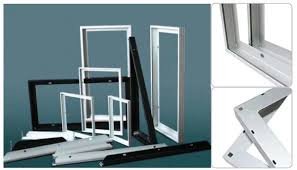
Strength and durability don’t always have to come at the cost of added weight. In modern construction and manufacturing, finding the perfect balance between structural integrity and efficiency is key. Aluminum framing has emerged as a game-changing solution, offering impressive strength while keeping weight to a minimum. Here’s how it outperforms traditional materials in structural applications.
The Science Behind How Aluminum Framing Enhances Structural Integrity
Engineers have long sought materials that can handle heavy loads without becoming overly cumbersome. Aluminum framing achieves this balance through its unique internal structure. Unlike traditional steel or wood, aluminum’s atomic composition allows it to remain rigid under stress while maintaining flexibility where needed. This means structures built with aluminum framing can withstand significant forces without buckling or breaking.
One of the biggest advantages of aluminum is its ability to distribute stress evenly across its frame. Instead of concentrating pressure in one area, as some materials do, aluminum disperses force throughout its structure. This prevents weak points from developing, making it ideal for everything from architectural frameworks to industrial machinery. Its ability to stay strong while reducing overall weight makes it a top choice for modern engineering.
Unique Alloy Composition That Balances Strength and Lightweight Design
Raw aluminum by itself isn’t strong enough for most structural applications, but when mixed with the right alloys, it transforms into an incredibly resilient material. The secret lies in the addition of elements like magnesium, silicon, and zinc, which enhance aluminum’s natural properties. These alloys help reinforce the metal without making it unnecessarily heavy.
Unlike steel, which can be dense and difficult to work with, aluminum framing offers a lightweight alternative without sacrificing durability. Its strength-to-weight ratio is one of the highest among construction materials, meaning it can support heavy loads without the extra bulk. This is particularly useful in aerospace, automotive, and modular construction, where reducing weight without compromising stability is a priority.
Why Aluminum Framing Distributes Load More Efficiently Than Steel
Traditional materials like steel are known for their strength, but they often come with a drawback—uneven weight distribution. Steel can create concentrated stress points, leading to fatigue and failure over time. Aluminum framing, on the other hand, is designed to distribute weight more evenly, allowing for better load management in various structures.
This advantage is especially noticeable in industries that require mobility, such as transportation and robotics. With aluminum’s ability to evenly spread forces across its frame, structures become more resistant to deformation. This not only increases their lifespan but also reduces the need for excessive reinforcement, making aluminum a more cost-effective and efficient choice for long-term use.
Reinforced Extrusions That Prevent Warping and Frame Distortion
One of the challenges in structural design is keeping frames from warping under extreme conditions. Over time, materials like wood and steel can bend, twist, or even crack due to environmental factors and stress. Aluminum framing is engineered with reinforced extrusions that prevent these issues, maintaining its shape and performance even under heavy loads.
The extrusion process allows aluminum to be formed into precise shapes that maximize strength while keeping weight low. These specially designed profiles resist bending and flexing, ensuring stability in a variety of applications. Whether in high-rise buildings, industrial machinery, or custom manufacturing, aluminum’s resistance to warping makes it a reliable choice for long-term structural integrity.
Shock Absorption Capabilities That Minimize Structural Stress
Structures face constant pressure from vibrations, impacts, and dynamic loads. Traditional materials like steel can be rigid and prone to transferring shock throughout a structure, which may lead to cracks and fatigue over time. Aluminum framing, however, has natural shock-absorbing properties that reduce structural stress and prolong the lifespan of components.
This makes aluminum an excellent choice for applications that experience movement, such as bridges, vehicles, and modular buildings. The ability to absorb and disperse energy helps prevent damage caused by repeated stress, reducing maintenance needs and ensuring a longer-lasting structure. Its combination of strength and flexibility allows it to handle unpredictable forces better than many heavier materials.
Engineered Connections That Improve Stability Without Extra Bulk
The way components connect in a structure plays a crucial role in overall stability. Traditional materials often require heavy bolts, welds, or thick joints to maintain strength, which can add unnecessary weight. Aluminum framing is designed with precision-engineered connections that provide exceptional stability without the need for excessive reinforcements.
These smart connection systems allow for easier assembly and disassembly, making aluminum a preferred material for modular and prefabricated structures. The reduced need for additional supports also means a cleaner, more efficient design. Whether in construction, manufacturing, or automation, aluminum’s ability to maintain strength while minimizing bulk gives it a distinct advantage over conventional framing materials.


