INTRODUCTION:
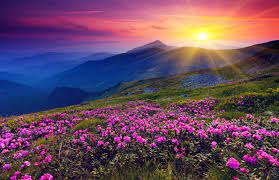
The picturesque valley, located at elevations ranging from 3300 to 3650 meters, is a nature lover’s heaven. It stretches for around 6 kilometers from Bhuindhar village and spans an area of roughly 87 square kilometers. The valley is especially rich in floral richness, with the most diverse collection of wildflower species. The Pushpawati River runs across the lush valley. Exotic flowers are in full bloom in the valley from June through early September. There are over 520 types of blooming plants in the region, which was designated as a National Park in 1982. This national park is home to Himalayan black bears, musk deer, brown bears, Bharal, and a diverse range of birds and butterflies.
Valley of Flowers National Park
The Valley of Flowers National Park in the Garhwal Himalayan area is like a scene from a childhood fairy tale, with its myriad of colors – purple, yellow, red, blue, and white – that form a carpet on the valley floor during its full flowering season. The Valley of Flowers trek, which represents the relationship between nature and the human soul, is one of the most beautiful treks in the Garhwal Himalayan area, attracting visitors of all ages from all over the world. The blue Primula remains the most gorgeous bloom of the entire Himalayan flora, and one may feast his eyes on this magnificent flower during the peak season, which runs from mid-July to mid-August.
The trip continues from Ghangaria to a great height of 4,300 meters to Hemkund Sahib, one of the Sikh holy places encased inside the mountains. Another notable feature of the Valley of Flowers trip is the lake’s serene and crystal blue water, which mirrors the surrounding peaks.
Valley of Flowers Trek
The Valley of Flowers Trek, which is about a 22-kilometer drive from Joshimath, is awash in natural colors and inspires faith among visitors. The route continues along the Alaknanda River to Ghangaria, with a mild rise through an evergreen forest densely forested with Himalayan plants. The path is deliberately placed with eateries along the way and is popular with Sikh pilgrims. Thank you to the volunteers that sweep the route daily. The path divides in two after Ghangaria. One way leads to the Valley of Flowers, while the other leads to Hemkund Sahib. The journey to Valley of Flowers National Park takes you through many natural components such as babbling streams, hills, woodland, and the breathtaking sight of towering peaks in the distance. The track gradually leads to a little footpath along the valley’s side, followed by a dramatic bend that allows you to discover the distinct and colorful nature concealed inside the mountains. The Valley of Flowers National Park is unlike any other hiking destination in the Garhwal Himalayan area. It is a botanist’s heaven, a photographer’s natural reel and frame, and a leisure escaper’s dream.
A Visit to the Valley of Flowers National Park’s Highlights
Famous temples at Haridwar, Rishikesh, Joshimath, and Hemkund Sahib, as well as confluences, crystal clear lakes, verdant valleys, snow-clad Himalayan peaks, and many more.
Low-altitude climb with massive canyons, expansive views, and brilliant colors. The scenery changes dramatically.
Snow-capped peaks, gurgling waterfalls, lush green meadows, and a rainbow of wildflowers.
Rare views of the indigenous people’s old culture.
Hotel/guest house nights
What Time of Year Is Best for Visiting Valley of Flowers?
June to July: One may see the breathtaking glaciers and waterfalls in the Valley of Flowers during these months. The main advantage of going during this month is that there will be little to no rain and the flowers will be almost ready to bloom.
In August and September: As the snow melts in May, new plants germinate and flourish until August. Until mid-August, many flowers are in bloom. The best time to see the most blooms is in August and September, which is also the last month to visit the Valley of Flowers. Plants and flowers begin to dry up and deposit their seeds on the ground for the next season.
What is the location of the Valley of Flowers?
Valley of Flowers National Park is an Indian national park in the West Himalayas. It is famous for its unique alpine flower meadows and the variety of flora found there. It is situated in the state of Uttarakhand. This diversified environment also supports rare and endangered species such as the Asiatic black bear, snow leopard, brown bear, and blue sheep. The Valley of Flowers National Park’s peaceful beauty contrasts with the rough alpine wildness of Nanda Devi National Park to the east. They form a unique transition zone between the Zanskar and Great Himalaya mountain ranges. The park encompasses an area of 87.50 km2.