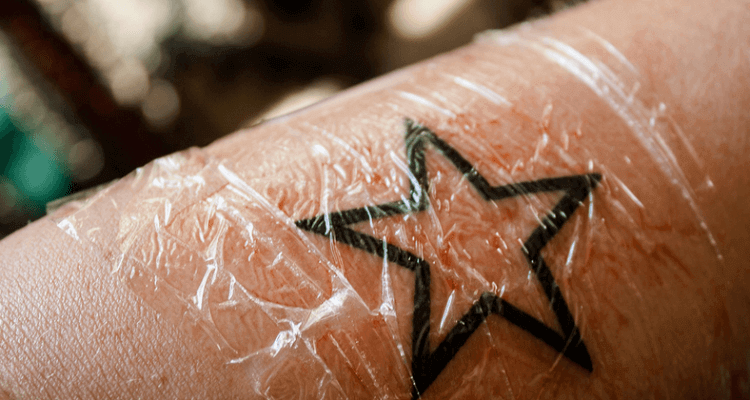
A tattoo is more than just a work of art and a way to express yourself. It’s no less than a medical procedure because the artist inserts the ink beneath your skin with a needle. It’s just like any other wound that needs to be properly taken care of. When you open your skin, you expose yourself to scarring and infection.
That is why it is crucial to take good aftercare of your tattoo and ensure your artist uses the very best tattoo supplies. You must have seen artists covering newly-etched tattoos with saran wraps. Scroll down to read this post if you wonder why tattoo artists cover newly etched tattoos with plastic wrap.
• Why do tattoo artists cover a new tattoo with plastic wrap?
All the tattoo artists wrap a newly etched tattoo of their clients with a bandage or plastic wrap. Before they wrap, they first apply a thin layer of antibiotic ointment over the tattoo. This is to make sure that the newly etched tattoo is completely protected from dust, dirt, bacteria, harmful sun rays, etc. It also keeps the tattoo from rubbing against your clothing and becoming irritated.
Wrapping tattoos in plastic or saran wrap is a part of the tattoo care process. The biker community actually came up with the idea of wrapping tattoos in plastic. For showing their body artwork to other members, they had to lift up their bandages, which was quite a task. So one of them came up with the idea to wrap it in plastic. Since then, the practice of wrapping tattoos in plastic has been prevalent.
• How does wrapping a tattoo help?
As said earlier, a newly etched tattoo is a wound, just like any other cut or wound on your body. When you get a cut or burn, you simply use something to protect it, such as a bandage, etc. Similarly, wrapping your tattoo, whether with a bandage or plastic wrap, allows you to provide your tattoo complete protection from bacteria, dust, dirt, etc. so that it can heal properly.
The process of tattooing involves puncturing your skin with the needle(s). The artist uses a needle to push ink beneath the surface of your skin into the dermis. The area where you’re getting a tattoo gets repeatedly punctured by a needle, resulting in an abrasion wound. This fresh wound is highly susceptible to infections and other complications. That is why artists cover it with wraps after applying an ointment on it.
• Benefits of Tattoo Wrapping
As said earlier, one of the primary benefits of wrapping a tattoo is to provide it complete protection from bacteria, viruses, and germs. Here are the other benefits:
The plastic wrap acts as a wall between your tattoo and potential external infections caused by bacteria, germs, viruses, and other microorganisms.
The wrap shields your tattoo from external physical impact, which you can experience during contact sports or other physical activities.
The wrap protects your tattoo from any potential infection that you may get when in some dirty and unsanitary place.
The wrap protects your tattoo from getting distorted due to tight clothing or harsh fabric.
The wrap lets you sleep properly without snagging your clothes or causing the bedding to stick to your tattoo.
The wrap stops the bleeding and oozing, allowing you to go about your business as usual.
• How long should a person keep his/her tattoo wrapped?
So, you should keep the dressing on for as long as your tattoo artist advises. Some artists ask their clients to wear the wrap only for a few hours. Others advocate allowing it to remain until it is removed on its own. A wrap basically helps to absorb any fluid or excess ink that leaks from the tattoo.
Caring for your tattoo can help to avoid any complications, such as infection. In addition to visiting a licensed and reputable tattoo artist, you must also take care of your new tattoo at home. Here are the best tattoo aftercare tips for you.