
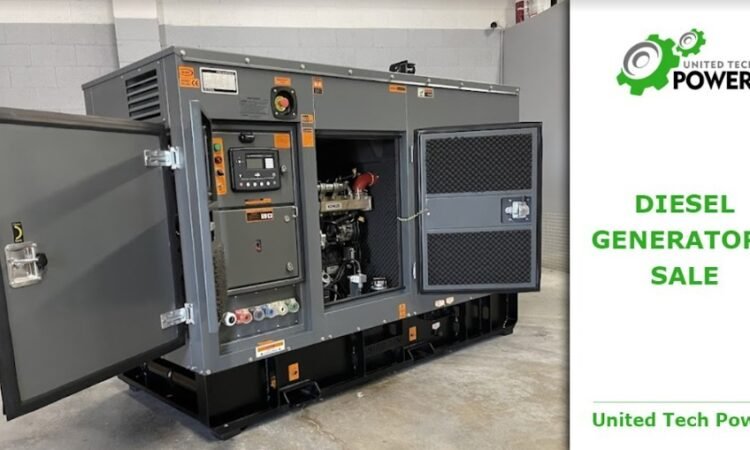
Electric generators are getting more and more common since lots of companies and houses use this equipment as a temporary or main source of power.
Today we will talk about these generators and the features you need to consider when looking for a generator.
What is an electric generator?
Electric generators, also called generator sets, light generators or electric current generators, are machines that are responsible for converting the mechanical energy of a motor into electrical energy.
These are basically used as backup for possible power outages or to generate electricity in places where there is no electricity supply.
Electric power generators can be divided into portable generators and industrial generator sets. Portable generators, also called commercial or for individuals, are the lighter generators, with less power, etc. On the other hand, industrial generator sets are the most powerful and heaviest.
There are countless power generators on the market with different characteristics and purposes. Next we will discuss the important characteristics to take into account when you are looking for industrial or commercial diesel generators for sale. Besides, you can also consider renting a generator or different super-silent power generators financing options.
1. Single-phase or three-phase electric generators?
According to the voltage of the current they generate, we can divide the electric generators into single-phase and three-phase.
Single-phase generators are the most used at the domestic level. These generate an output voltage of 220V. The supply of single-phase generators is limited to a maximum power of 15-20 kVA.
Three-phase generators are the most used for specific equipment that requires three-phase current and so are almost all high-power generators, starting at about 15-20 kVA. These generate an output voltage of 380V.
It should be said that whenever we have a three-phase current we can obtain a single-phase current, although it is not advisable to purchase three-phase generators if our needs are single-phase, since the performance will be much lower.
2. Conventional generators, Inverter or AVR?
According to the stability of the voltage of the electric current generated by the electric generator, we can divide them into different types:
Conventional electric generators
Conventional electric generators are traditional generators that do not have any output voltage regulation system. These generators are the cheapest and the voltage of the current they generate may not be very stable, having some peaks.
They are used for all kinds of devices and machines that do not require a stable voltage, such as many tools, light bulbs, radiators, etc.
AVR electric generators
AVR electric generators are more sophisticated current generators than conventional ones since they are equipped with an automatic voltage regulation system, which guarantees a stable voltage (similar to that supplied by the electrical network, +/- 2%)
They are used to power appliances, electronics, machines, etc. that require a stable voltage to work properly.
3. Diesel or Gasoline current generator?
The most used electric generators on the market are basically powered by gasoline or diesel.
Gasoline electric generators
Gasoline electric generators are ideal for situations in which we will not use them continuously, but for short periods of time, also for emergency situations.
This is because all gasoline generator sets work with an engine at 3000 rpm. This high rate implies that it is advisable to use them for intermittent services of a maximum of 4 hours with pause cycles.
Only generators with powers of less than 15 kVA are powered by gasoline.
Diesel electric generators
Diesel generators are the most suitable for more intensive and continuous uses, especially 1500rpm diesel generator sets. These generators are the most robust, durable and reliable.
All high-power electric generators are powered by diesel. Diesel generators are perfect for continuous uses, they have lower consumption and therefore greater autonomy.


